CT Colonography: An Emerging Specialty for Forward-Thinking Techs
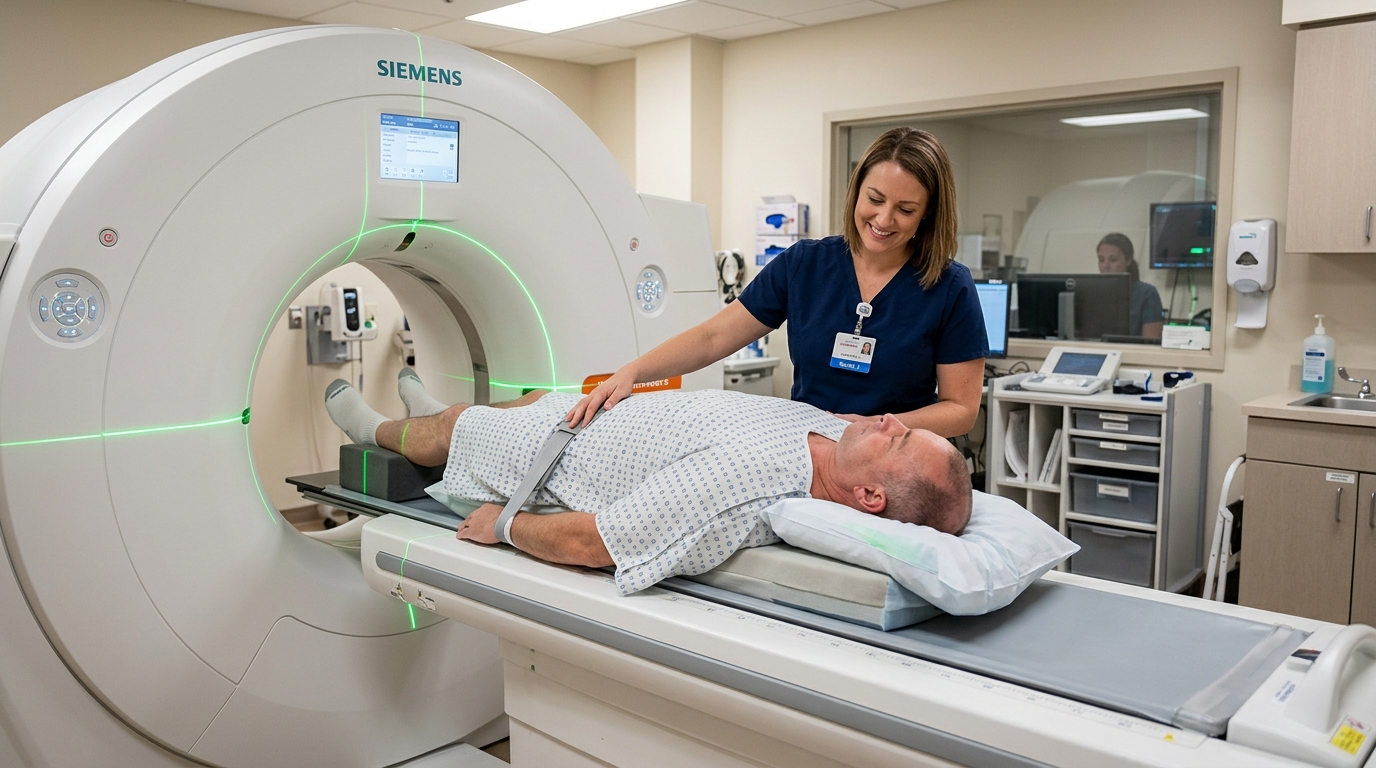
Three years ago, I was consulting with a hospital system in the Midwest about their imaging volume forecasts. The administrator showed me the trend data and I almost missed it at first: CT colonography volume was up 240% year-over-year.
"We're hiring," she said. "But we can't find trained techs."
That conversation stuck with me. Because it pointed to something I've noticed across multiple health systems and imaging centers: CT colonography is becoming a major specialty, but most radiology technologists haven't caught onto it yet.
Here's what I know: techs who develop expertise in emerging imaging specialties are the ones with the most career options, the highest earning potential, and the best job security. Five years ago, molecular breast imaging was emerging. Today, techs with that certification are getting called back constantly. The same is happening with CT colonography right now.
Let me tell you why this matters for you.
What Is CT Colonography (And Why It's Growing So Fast)
First, let's clarify the terminology. CT colonography is also called virtual colonoscopy or CTC. It's a CT-based imaging procedure that creates detailed images of the colon and rectum to screen for polyps, cancers, and other abnormalities.
Here's how it works in practice:
The patient comes in (typically for colorectal cancer screening). Unlike a traditional colonoscopy, they don't need heavy sedation—that's a big advantage for elderly or medically complex patients. The patient undergoes bowel prep (similar to traditional colonoscopy), and then receives a small amount of contrast and gas insufflation to distend the colon.
You perform two CT scans—one with the patient prone, one supine. This gives the radiologist multiple views and improves detection of small lesions that might be hidden by normal bowel wall folding.
The whole scanning process takes maybe fifteen to twenty minutes. Unlike traditional colonoscopy, which requires a gastroenterologist and operating room time, a CT tech can run these studies efficiently back-to-back.
The radiologist then reads the images, and if anything suspicious is found, the patient goes to traditional colonoscopy for biopsy or removal.
Here's why it's exploding:
Screening Advantage: Colonoscopy is the gold standard for colorectal cancer screening, but access is limited. There aren't enough gastroenterologists to scope everyone. CT colonography is an alternative screening tool—less invasive than traditional colonoscopy, no sedation required, faster turnaround.
Aging Population: As Baby Boomers hit their sixties and seventies, screening volume is increasing dramatically. The demand for efficient screening tools is massive.
Reimbursement: Insurance companies are increasingly covering CT colonography as a screening tool. That wasn't true five years ago. Now it's covered by Medicare and most private insurers.
Efficiency: A CT tech can complete 8-10 CT colonography exams per day. A gastroenterologist doing traditional colonoscopy maybe does 12-15. For pure screening, CTC is more efficient.
The American College of Radiology and other major organizations have formalized protocols and guidelines. The field is transitioning from "emerging" to "established," and that's exactly when specialty demand peaks.
The Day-to-Day Reality: What You'd Actually Be Doing
Let me paint you a realistic picture of a CT colonography tech's day:
You arrive at the imaging center. Your first patient is Mrs. Chen, seventy-two, no sedation needed. You explain the procedure—she's heard of virtual colonoscopy, she's not anxious. You position her prone on the CT table, ensure she's comfortable, coach her through breath-holding.
First scan takes ninety seconds. She flips to supine. Second scan takes ninety seconds. She's done.
You review your images quickly—they're good quality, no motion artifact, colon is well-distended. Next patient comes in. This one is more challenging—overweight gentleman with significant diverticular disease. You take extra time positioning, maybe need a slightly different angle, but you get diagnostic images.
By lunchtime, you've completed seven exams. Most are straightforward. A few required problem-solving. All got good quality images.
What you're NOT doing: sedation management, biopsies, patient recovery room monitoring. That's all handled by the gastroenterology team if the patient needs traditional follow-up colonoscopy.
The skill set is pure imaging: positioning, protocol knowledge, patient communication, understanding anatomy, quality control. You're basically being a really good CT tech with specialized knowledge of colon imaging.
Training and Certification Requirements
Here's what I tell techs considering this specialty:
Baseline requirement: You need to be a registered CT technologist (ARRT CT certification). You can't specialize in something without mastering the fundamental modality.
Specialized Training: There's no single "CT colonography certification" from ARRT yet (though I'd expect one within the next few years). Instead, training typically comes through:
- On-the-job training at a facility that performs CTC (4-12 weeks typically)
- Vendor training from your CT manufacturer—GE, Siemens, Philips all have CTC-specific training programs
- Professional workshops and conferences—the American College of Radiology and radiology tech associations offer CTC workshops
I recommend the combination approach. Get your CT certification, take a workshop or online course to understand CTC fundamentals, then find a facility willing to train you in-house.
Training timeline: If you're already ARRT-certified in CT, you could be competent in CTC within 2-3 months of hands-on training. If you need to get your CT cert first, plan 6-12 months total.
Pay and Job Outlook
This is where CT colonography gets interesting.
Current Pay Premium: Facilities performing CTC are paying premium rates for techs with demonstrated CTC competency. I'm seeing:
- Standard CT tech: $55-68K (regionally variable)
- CT tech with CTC specialty: $62-75K (same market)
- CTC lead/trainer: $70-85K+
That's a $5-10K premium for developing specialty expertise. And that's right now—as demand outpaces supply, those premiums will only grow.
Job Security: Once you have CTC skills, you're more valuable. You can market yourself to hospitals, imaging centers, and screening networks specifically. I had a colleague, Marcus, who was a competent but fairly generic CT tech. Once he added CTC to his skillset, he got three job offers in six months. His current employer bumped his pay just to keep him.
Growth Trajectory: This isn't a dead-end specialty. As the field matures, the opportunities diversify. You might become a CTC trainer for new techs. You might move into protocol development or quality assurance. I know two former CT techs who moved into device sales for contrast agents and insufflation systems—they earned way more money and used their CTC background.
The Strategic Advantage of Learning an Emerging Specialty
Let me be real with you: this is an opportunity moment. And opportunity moments don't last forever.
I've watched this pattern repeat itself in radiology:
When 3D mammography (tomosynthesis) was emerging, techs who got certified early had huge advantages. They could command higher pay, they had more job options, they became experts in their facilities. Now, five years later, tomosynthesis is standard, and the premium pay has normalized.
The same will happen with CT colonography. In five years, it'll probably be standard practice at most imaging centers. CTC will be just "what we do." The specialty advantage will be diminished.
But right now? You're in the window where early adopters get rewarded.
A tech I know, Jennifer, moved from general radiology to CTC two years ago specifically because she saw this trend. She invested time in training, got competent, and now she's the go-to CTC expert at her system. She's the one training others. She's the one pitching the technology to new referral partners. She earns $72K as a staff tech but could easily move into leadership if she wanted.
"I looked at the numbers," she told me. "CTC volume is growing 20% annually. Reimbursement is improving. Competitors can't fill these positions. That's a specialty I should own."
Smart thinking.
What You Need to Know Before You Specialize
Before you commit to CT colonography training, consider these factors:
Does your market have demand? Check your region. Are there health systems, screening networks, or imaging centers that perform CTC? What's their volume trend? If CTC volume is minimal in your area, the specialty advantage is limited.
Are you already a good CT tech? This specialty builds on fundamental CT skills. If you're struggling with general CT, adding a specialty won't help. Make sure you're solid before you specialize.
Do you have the patience for screening work? CTC is screening-focused. It's high-volume, mostly normal studies, routine positioning. It's not trauma, not interventional, not complex cases. If you love variety and complexity, this might feel repetitive.
Is your facility willing to train you? You need hands-on CTC experience to become truly competent. Can your employer provide that? Some facilities only do occasional CTC. You need volume to develop expertise.
What's your long-term goal? Are you trying to maximize earnings? Build expertise? Reduce physical demands? Different answers might point to different specialties.
My Take: Why CTC Matters for Your Career
Look, I've spent years watching the imaging field evolve. Generalists are always in demand, but specialists are always more valuable. The techs who develop expertise in emerging specialties—molecular breast imaging, spectral CT, advanced cardiac imaging, CTC—are the ones with options.
CT colonography is in that sweet spot right now: it's established enough to be real and sustainable, but emerging enough that early adopters get rewarded. The volume is growing fast. Reimbursement is improving. And there aren't enough trained techs yet.
If you're a solid CT tech looking to increase your value, build expertise, or move into a higher-paying position, CT colonography is worth your serious consideration.
The window for early-adopter advantage won't stay open forever. But it's open right now.
And that's worth paying attention to.
Related Articles

Burned Out as a Rad Tech? Here's How to Reignite Your Career
April 23, 2026

Managing Up: How Rad Techs Can Influence Department Decisions
April 22, 2026

How to Compete With Travel Agency Pay Without Breaking Your Budget
April 22, 2026
Quality Assurance in Radiology: Why QA Culture Affects Retention
April 21, 2026