The Future of Mobile Imaging: Opportunities for Rad Techs
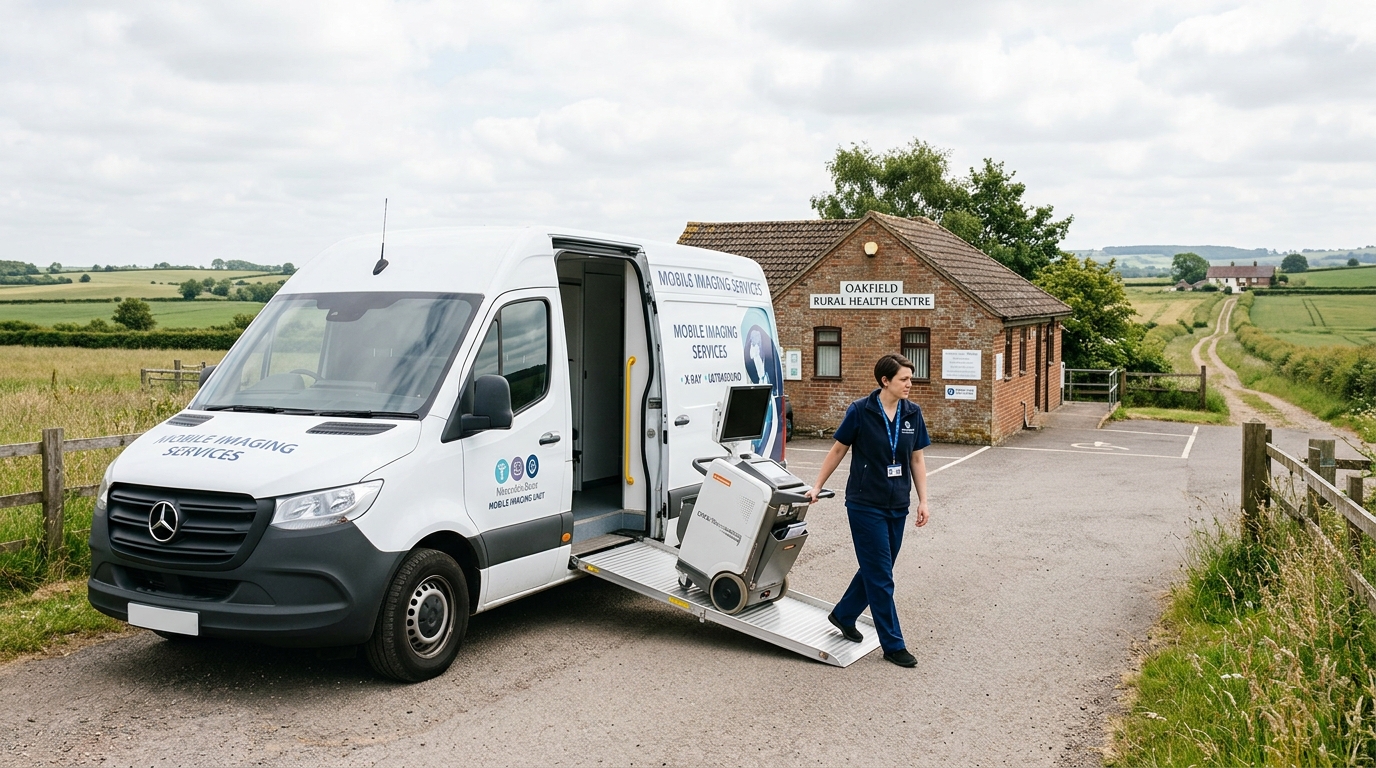
When I started in radiology back in 2010, mobile imaging meant portable chest X-rays and maybe the occasional trauma case. You'd see the mobile X-ray unit sitting in a corner of the department most days. It wasn't where the action was. The action was in the main rooms—CT, MRI, nuclear medicine, interventional radiology. That was the career path everyone wanted.
Fast forward to now, and the mobile imaging world is completely different. And honestly? It's become one of the most interesting and lucrative specializations a rad tech can pursue.
I made the switch to full-time mobile imaging five years ago, and I want to tell you why I think this is the future of radiology for a lot of technologists—and why you should be paying attention if you're early in your career or looking for a change.
What Mobile Imaging Actually Includes Now
When I talk about mobile imaging, I'm talking about way more than your grandfather's portable X-ray equipment. We're living in a genuinely different era:
Portable X-ray: This is still the bread and butter. But the equipment has gotten so much better. Digital radiography has made image quality comparable to stationary systems. You're doing portable chests, abdomen, extremity films—all with precision imaging quality.
Mobile CT units: This is the game-changer. Smaller, more efficient CT scanners that can be transported to facilities. We're talking about bringing CT imaging to nursing homes, community health centers, and disaster sites. When I first heard about this, I thought it was science fiction. Now? They're deployed regularly.
Portable ultrasound: The equipment has miniaturized so dramatically that experienced techs trained in ultrasound can do real diagnostic imaging with a machine that literally fits in a backpack. Not quite that small, but close.
Mobile MRI: Here's where it gets really interesting. Mobile MRI units are still relatively new, but they're rolling out to nursing homes and underserved areas. They're usually lower field strength (0.5T or 1.5T), but the capability to bring MRI imaging outside hospital walls is revolutionizing access to care.
Disaster response and telemedicine integration: During COVID, mobile imaging units became critical. We're seeing permanent roles dedicated to disaster response, crisis care, and telemedicine-integrated mobile units where radiologists remote-read your images in real-time.
What the Work Actually Looks Like
Here's the honest version of what a day looks like in mobile imaging. It's different from working in a hospital radiology department, and some people love it while others hate it.
The Good: You're not stuck in a dark room for eight hours. You're mobile, which means you're interacting with diverse patient populations. One day you're in a nursing home imaging a 94-year-old with pneumonia. The next day you're at a community health center in an underserved neighborhood. The day after that, you're setting up mobile CT for a disaster response drill. There's genuine variety.
The patients are often fascinating. Nursing home residents frequently have complex histories. You're actually learning how to adapt your technique for patients who can't move easily, who have multiple comorbidities, who need gentler handling. I've learned more practical clinical skills in mobile imaging than I ever did in the main hospital department.
You've also got autonomy. You're often the only imaging professional on-site. You're making decisions about positioning, technique, protocol modifications. There's professional responsibility that some techs find incredibly fulfilling.
The Challenging Parts: You're driving. A lot. Or you're the passenger coordinating with drivers. Vehicle time cuts into actual imaging time. Weather affects your schedule. You're working in less-controlled environments than a sterile hospital imaging suite.
You're also often alone or with minimal support. If something breaks, you troubleshoot or call it in—there's no walking to the department next door to grab help. That requires self-sufficiency and problem-solving skills.
Patient populations can be medically complex and sometimes emotionally heavy. Many mobile imaging patients are elderly, chronically ill, or in crisis situations. You need emotional resilience.
But honestly? After five years, the good significantly outweighs the challenging.
The Career Growth Potential
Here's something that surprised me: mobile imaging offers genuine career advancement. I initially thought of it as a lateral move. Instead, it's become the launching point for several different paths.
You can become a mobile imaging supervisor, managing multiple units and technologists across a region. You can move into sales and support with equipment manufacturers—companies that make mobile X-ray and CT units specifically seek out experienced technologists who understand the workflow. You can transition into home health administration or nursing home imaging program development.
I have a colleague who spent four years in mobile imaging, built expertise in portable ultrasound, and is now leading a program to bring point-of-care ultrasound training to nursing homes across three states. That's not a job that existed five years ago.
The specialization is also increasingly valuable. Mobile imaging radiologists, mobile imaging program directors, mobile imaging supervisors—these are becoming specific roles with competitive compensation. You're not trying to advance in a saturated general radiography pool. You're developing rare expertise.
The Pay
Let's talk money because it matters. I'm going to be specific because I wish someone had been this clear with me early in my career.
When I transitioned to mobile imaging five years ago, I took a slight pay cut from my hospital radiology position to do it. That seemed stupid at the time. But here's what happened:
- Base salary for mobile imaging techs in my region (mid-Atlantic) was roughly 8-10% lower than hospital positions
- But the shift differential pay was higher—mobile imaging often involves early mornings, evenings, and weekend work. That's compensated better
- Overtime opportunities were substantially greater. Because mobile units are deployed based on demand and scheduling is less predictable, overtime is frequent
- Travel reimbursement was significant. I wasn't paying for gas, but I was getting mileage reimbursement, meal allowances, and occasionally hotel stays
After one year, my total compensation was roughly comparable. After three years, with raises and advancement, it was notably better. Last year, I made about 18% more than my former hospital colleagues with similar experience.
The range right now: entry-level mobile imaging positions start around $48,000-$52,000. Experienced techs with 5+ years in mobile are looking at $65,000-$75,000. Supervisory roles push into the $80,000+ range depending on region.
That's not nuclear medicine or interventional radiology money, but it's competitive. And the trajectory feels better.
The Skills You Need to Develop
If you're thinking about transitioning into mobile imaging, here's what you should be building:
Technical skill diversity: Mobile imaging needs generalists. You should be comfortable with portable X-ray, ideally some fluoroscopy, and increasingly, ultrasound. If you can pick up CT knowledge, even better.
Patient assessment and adaptation: You're working with people in varied settings. Can you assess patient capabilities quickly and modify technique accordingly? Can you recognize when someone needs medical attention beyond imaging?
Troubleshooting mentality: What do you do when equipment acts up and you're 45 minutes away from support? You need problem-solving skills and technical documentation literacy.
Communication skills: You're often the imaging expert in environments without radiology infrastructure. You're explaining exams to nursing home staff, physicians, and patients who might not understand medical imaging.
Professional independence: You're not always supervised. You need integrity, self-motivation, and the ability to maintain standards without oversight.
The Market Opportunity
Here's the macro picture: the American population is aging. Nursing homes are becoming more medically complex. Diagnostic imaging capability is increasingly essential for appropriate care in these settings. We're also seeing intentional efforts to move imaging out of expensive hospital settings into community environments.
The Bureau of Labor Statistics projects 7-8% growth in radiology technologist positions through 2032. But mobile imaging is projected to grow at nearly 15% annually. That's significant opportunity.
Hospitals are competing for experienced mobile imaging talent. Nursing home networks are developing dedicated imaging programs. Home health companies are integrating portable imaging into their service offerings. This isn't a niche market anymore—it's becoming a core part of healthcare delivery infrastructure.
Should You Consider It?
Mobile imaging isn't for everyone. If you love the deep specialization of nuclear medicine, the intensity of trauma imaging, or the technical complexity of interventional radiology, mobile imaging might feel too generalist.
But if you're someone who values variety, enjoys patient interaction, likes a degree of independence, and want to bring diagnostic capability to underserved populations? It's genuinely worth exploring.
Five years ago, I thought I was stepping back. Instead, I stepped into something that's turning out to be more interesting, more lucrative, and more career-sustainable than I expected. The mobile imaging space is growing exactly when healthcare needs experienced technologists most.
If you're early in your career, I'd recommend building some mobile imaging experience intentionally. It's a valuable specialization. And if you're mid-career and feeling stuck in traditional hospital imaging roles, this might be the change you've been looking for.
The future of radiology isn't just in hospital imaging suites. It's in nursing homes and home health and disaster sites. And that future needs experienced, thoughtful rad techs. If that sounds like something you want to be part of, there's genuinely never been a better time to make the move.
Related Articles

Burned Out as a Rad Tech? Here's How to Reignite Your Career
April 23, 2026
Managing Up: How Rad Techs Can Influence Department Decisions
April 22, 2026
How to Compete With Travel Agency Pay Without Breaking Your Budget
April 22, 2026
Quality Assurance in Radiology: Why QA Culture Affects Retention
April 21, 2026