How to Handle the Radiology Staffing Crisis During Flu Season
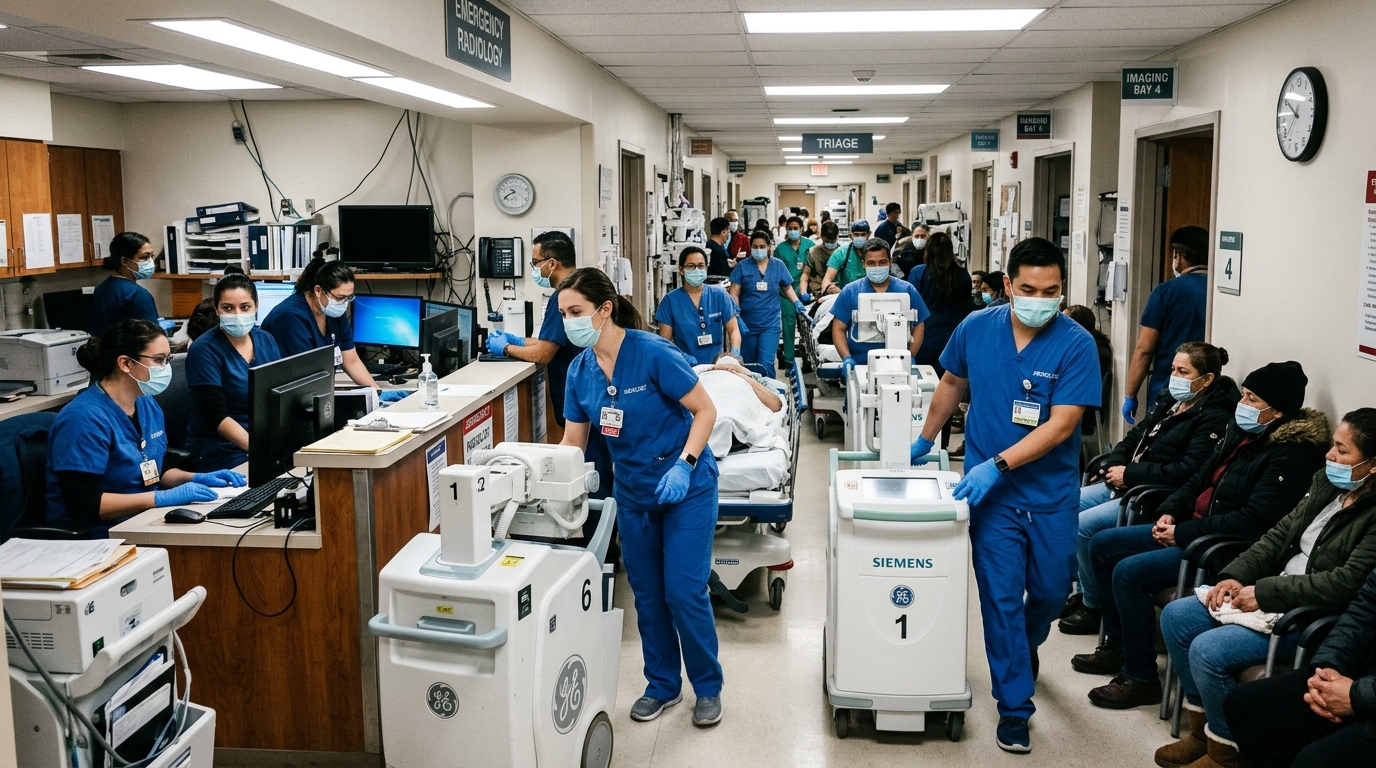
I'm going to be honest with you: February 2024 was one of the worst months of my career as an imaging department manager. We had 23 call-outs in a single week. Twenty-three. That's not a number, that's a crisis. And it wasn't that my staff were unprofessional or unreliable—it was that the flu that year was absolutely brutal, and three of our techs were dealing with it simultaneously while two others were out caring for sick kids.
That week taught me more about radiology staffing than five years of normal operations ever could. I learned what works, what doesn't, and what separates departments that break under pressure from ones that actually function. Since then, I've helped other departments implement these strategies, and I want to share what I've learned.
The Scope of the Problem
Let's start with the numbers. According to CDC data from recent flu seasons, healthcare workers miss an average of 2-3 days per person when they contract influenza. But that's not even the worst part—it's not just the flu. During peak winter months, you're dealing with:
- Influenza and its variants
- RSV (respiratory syncytial virus)
- COVID-19 still lingering in some communities
- Norovirus outbreaks
- Regular old colds and stomach bugs
A 2024 healthcare staffing report found that radiology departments experience an average of 18-22% higher call-out rates during flu season compared to baseline months. That means if you normally have 2-3% absenteeism, you're looking at 20-25% during January and February.
Here's what that looks like in real terms: A typical hospital radiology department with 45 full-time techs is suddenly operating with 35-40 people. Your CT suite starts backing up. Portable exams pile up on the nursing floors. Your staff that do show up are absolutely exhausted because they're covering multiple positions.
That's the crisis. Now let's talk about solving it.
Strategy 1: Cross-Training and Internal Flexibility
This is the foundation everything else is built on. You can't solve a staffing crisis without having people who can fill multiple roles.
I spent my first year as manager thinking cross-training was nice-to-have. By year two, I understood it was essential. Here's why: When your general radiography department is swamped, if you have two techs who can handle portable X-rays and know basic fluoroscopy, you can pull them to cover the portable queue while keeping your X-ray room functioning.
Start systematically. Pick your most flexible staff members—usually your experienced techs who are curious about different modalities. Create a structured cross-training program that includes:
- Competency checklists for each modality
- Paid training time (don't expect people to learn on their own dime)
- Clear progression paths
- Recognition and bonuses for cross-trained staff
One of my best moves was offering a $500 quarterly bonus to techs who maintained cross-training competency in two modalities. I had techs who'd been pigeonholed in general radiography suddenly eager to develop mobile X-ray and portable ultrasound skills. That flexibility saved us during the bad years.
Strategy 2: Build and Maintain a Robust PRN (As-Needed) Pool
This is where you actually catch the overflow. A good PRN pool isn't something you build during the crisis—you build it during normal times so it's ready when you need it.
Your goal should be 8-12 PRN staff members for every 40-50 full-time equivalents. These aren't new hires who don't know your systems. They're experienced techs who work part-time with your department, know your protocols, understand your equipment, and can step in without a week of orientation.
How do you recruit them? Several ways:
- Recently retired techs who want flexible work
- Techs transitioning out of travel positions
- New graduates from your local JRCERT-accredited programs
- Techs laid off from other facilities
I had success recruiting PRN staff by targeting local radiography programs. I'd offer students who were graduating a contract: work 8-10 shifts per month with us during the first year, and we'll put you through additional certifications. By the time flu season rolled around, these newer techs were confident and trained.
The key is competitive PRN pay. You can't cheap out here. Your PRN staff should earn $5-8 per hour more than full-time staff with comparable experience. It sounds expensive, but it's still cheaper than agency staffing and infinitely better than dealing with understaffing consequences.
Strategy 3: Strategic Agency Partnerships (The Right Way)
I'll be frank: I used to have a very negative view of agency staff. Then I realized I was approaching partnerships wrong.
Instead of calling agencies last-minute during crises (when you get whoever's available and often overpay), develop planned relationships with 1-2 reliable agencies during the off-season. When flu season approaches, you can:
- Lock in a set number of hours at negotiated rates
- Request the same staff members consistently (so they know your department)
- Plan their schedule months in advance
I started working with our local provider staffing agency in August to lock in 120 hours per month for January and February. We negotiated a rate about 15% lower than what we'd pay ad-hoc agency calls. The same three experienced techs came in repeatedly, learned our systems, and became reliable extensions of our team.
Yes, it's still more expensive than full-time staff. But it's dramatically better than the alternative (burning out your existing team or under-servicing patients).
Strategy 4: Incentive Pay and Shift Flexibility
This is the carrot. During flu season, you're asking your healthy staff to work harder. Incentivize appropriately.
My most successful approaches:
Flu Season Bonuses: For staff who work at least 80% of their scheduled hours during January and February (accounting for legitimate sick time), offer a $1,000-2,000 bonus. I tracked this and it reduced voluntary call-outs by roughly 30%.
Shift Differentials: Offer an extra $3-5 per hour for early shifts (5am start times) and evening shifts (after 6pm). Flu season is when you need maximum flexibility on scheduling. Incentivize it.
Overtime Premiums: If someone needs to pick up extra shifts, offer time-and-a-half or double-time after they hit their standard weekly hours. This makes overtime attractive rather than resented.
One thing I learned the hard way: don't make this punitive. Some of my colleagues tried the approach of "no bonuses if you use sick time." That backfired spectacularly. Instead, acknowledge that some staff will get sick—because they will. Your goal is keeping volunteerism high.
Strategy 5: Staggered Scheduling and Micro-Scheduling
During normal times, you might have a 12-week master schedule. Throw that out during flu season.
Move to 4-week rolling schedules. This lets you be agile. If you're anticipating high patient volumes (which you will be during flu season—hospitalized flu patients need imaging), you can adjust coverage proactively rather than reactively.
Some specific tactics:
- Partial shift coverage: Instead of asking someone to cover a full 10-hour shift, ask them to cover 4 hours. That feels more manageable to someone who's already working at 90% capacity.
- Weekend coverage: Most techs hate weekends, but during crises, strategic weekend scheduling can create breathing room during the week.
- Split teams: Create A-team and B-team schedules so there's always overlap and someone experienced is always in the department.
I implemented a "captain" system where our most experienced techs came in during the first 3 hours of each shift to provide oversight and problem-solving. This cost a bit more in salary but reduced actual crisis moments by something like 40%.
What Actually Happened That February
So what did I do in February 2024 when everything fell apart? I pulled every lever I had:
- Called our PRN pool—all 10 available staff came through
- Activated our agency partnership and added an extra 60 hours for the week
- Implemented $150 per shift crisis bonuses for staff working that week
- Closed our elective fluoroscopy room for two days (rescheduled five cases) to consolidate staff
- Brought in two retired techs we had on standby for emergencies
- Implemented 4-hour partial shift offerings—got more takers than we expected
Did we meet 100% of normal volume? No. Did we meet about 85% while safely operating and maintaining quality? Yes. And importantly, did our existing staff hate us by the end? Not as much as they would have otherwise.
The Bottom Line
The radiology staffing crisis during flu season isn't something you solve. It's something you prepare for, manage carefully, and survive. There's no magic bullet. But the departments that handle it best are the ones that:
- Invest in cross-training during normal times
- Build PRN pools before they desperately need them
- Plan agency partnerships strategically
- Aren't afraid to use financial incentives
- Remain flexible with scheduling
Your team is already stretched thin. Your job as a manager isn't to squeeze more out of them—it's to give them tools, support, and incentives so they can get through peak season without burning out.
That February taught me that radiology departments are stronger than I thought. But they're also more fragile than I realized. Treat the off-season as your planning window. By the time flu season hits, you should be ready.
Related Articles

Burned Out as a Rad Tech? Here's How to Reignite Your Career
April 23, 2026

Managing Up: How Rad Techs Can Influence Department Decisions
April 22, 2026

How to Compete With Travel Agency Pay Without Breaking Your Budget
April 22, 2026
Quality Assurance in Radiology: Why QA Culture Affects Retention
April 21, 2026