Mammography Certification: Is the Specialty Right for You?
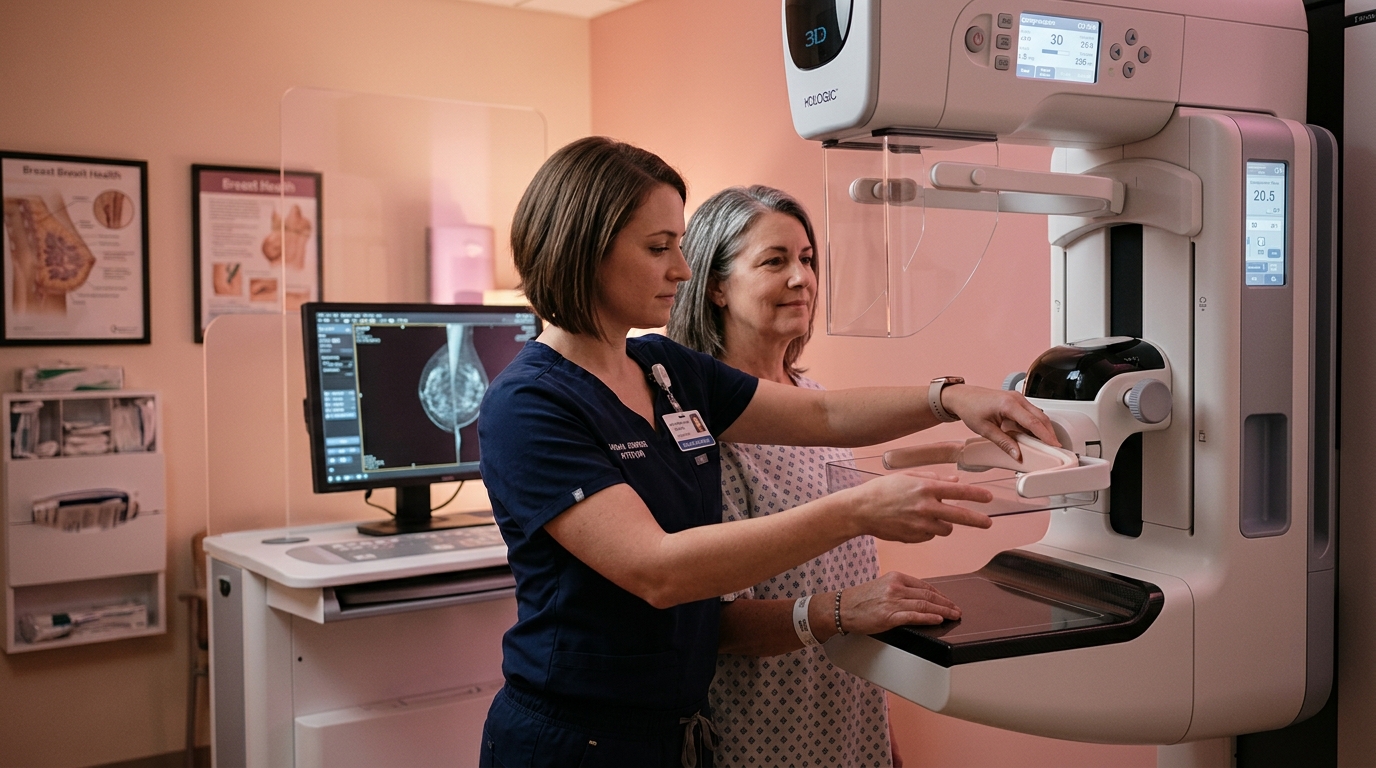
If you're a radiology technologist considering your next career move, mammography might be calling your name. The specialty offers something many other imaging modalities don't: a convergence of technical skill, genuine patient impact, and exceptional job security. But before you commit to the certification process, it's worth understanding what this specialty really demands—and what it genuinely rewards.
Over my 12 years managing imaging departments, I supervised dozens of mammography technologists. I watched them struggle with the emotional weight of early detection, navigate the strictest regulatory environment in radiology, and build profound relationships with patients. I also watched them turn down higher-paying positions in other specialties because they couldn't imagine leaving breast imaging. This post is for anyone considering whether they might be one of those technologists.
The Realities of Mammography Work: Beyond the Job Description
Mammography is not chest X-rays on a conveyor belt. Each patient arrives with a unique combination of anxiety, medical history, and physical needs. You'll position breasts of every size, density, and composition. You'll communicate with women who are terrified about their results, grateful for your kindness, frustrated by compression requirements, or simply wanting to get the exam over with.
The physical demands are real. Mammography requires precise positioning, controlled compression, and often standing for eight hours. Repetitive strain injuries—particularly in shoulders, wrists, and back—are an occupational hazard. Experienced mammo techs develop strategies to protect their bodies: proper body mechanics, stretching routines, and sometimes investing in ergonomic support tools. This is crucial information you rarely see in recruitment materials, but it matters for long-term career sustainability.
The emotional labor, however, might be the biggest factor most technologists don't anticipate. Unlike general radiography where you perform a technical service and move on, mammography involves direct patient interaction with significant psychological weight. Women often use your appointment as their first moment to process breast health concerns. Some cry. Some ask for your reassurance about what you see on the screen. Some come in after receiving a previous abnormal result, carrying anxiety that's palpable. You're not just a technician—you become part of their healthcare moment.
This emotional dimension attracts certain personalities to mammography and drives others away. If you're someone who finds genuine fulfillment in compassionate patient care, who doesn't mind absorbing some emotional weight, and who sees patient anxiety as an opportunity to provide comfort—mammography might feel like calling rather than job. If you prefer minimizing patient interaction and keeping emotional distance, this specialty will drain you.
Understanding MQSA and What It Means for Your Career
Before you even get certified, you need to understand MQSA: the Mammography Quality Standards Act. This federal law regulates mammography facilities with an intensity unmatched in most other imaging departments. MQSA requires specific qualifications, continuing education, and quality assurance protocols that don't exist elsewhere in radiology.
What does this mean for you? Job security. Facilities must employ certified mammography technologists. You cannot substitute a general radiography tech in mammography. This creates a floor of employment protection that's rare in healthcare. MQSA requirements also mean higher compliance costs for facilities, which translates to better funding for mammography departments relative to other imaging modalities.
MQSA also mandates continuing education—you'll need 30 hours every three years to maintain your certificate. This keeps you current with evolving standards and technology, which is professionally enriching but requires ongoing commitment.
The ARRT Mammography Certification Process
Getting certified is straightforward compared to what comes next. You'll need your ARRT radiography certification and (typically) one year of full-time mammography experience or equivalent. Then you take the ARRT mammography exam—multiple choice, computer-based, covering positioning, physics, quality control, and patient care.
The experience requirement is key. Most technologists don't walk into a job with zero mammography background and immediately apply for certification. Instead, you work in a mammography department for one year under supervision, learning from experienced mammo techs. This apprenticeship-style learning is invaluable because it's where you actually discover whether you like this work.
Study materials are widely available. Most technologists spend 100-150 hours preparing for the exam. Passing rates are respectable—around 75-80%—which means the exam is challenging but fair. The cost is reasonable at under $300 for the exam itself.
Salary Impact and Financial Rewards
This is where I'll be direct: mammography certification significantly increases your earning potential. According to recent salary surveys, mammography-certified technologists earn approximately 15-25% more than non-certified general radiography techs in the same geographic market. The exact increase depends on location, facility type, and experience level.
In major metropolitan areas, you're looking at median salaries in the $72,000-$85,000 range for mammo techs with several years of experience. In rural areas, the numbers are lower but the shortage of qualified mammographers is often more acute, which can sometimes work in your favor negotiation-wise.
The financial argument for certification is compelling. The exam costs under $300. Continuing education costs vary but average $500-$800 annually. The return on investment is achieved within the first year of salary increase. If you're in this profession for 10-20 more years, this specialty choice will result in $150,000-$250,000 in additional lifetime earnings. That matters.
The Critical Shortage and Your Job Security
Here's something the radiology industry doesn't talk about enough: we have a crisis of mammography technologist shortages. Across the United States, mammography departments consistently struggle to fill positions. Some facilities operate with chronic understaffing. Others have eliminated services or reduced hours because they cannot hire qualified technologists.
Why? Partly because the work is demanding. Partly because many technologists pursue other specialties. Partly because older mammo techs are retiring and fewer younger techs are entering the field. The result is exceptional job security for certified mammography technologists. Your skills are in demand. You have negotiating power. You can often find positions in preferred geographic locations. Remote positions don't exist in mammography, but that also means the positions that do exist can't be outsourced.
This shortage also creates opportunities. Some facilities offer hiring bonuses for qualified mammography technologists. Tuition reimbursement for certification is increasingly common. Flexible scheduling, premium pay for on-call positions, and rapid advancement into supervisory roles are accessible in ways they might not be in other specialties.
Daily Workflow and the Rhythm of Mammography
Your typical day in mammography differs significantly from general radiography. You might see 25-40 patients daily, depending on facility type. Screening mammography moves faster than diagnostic mammography (where techs perform additional views and patient interaction is longer). Many facilities use a combination.
Most mammography departments operate on appointment schedules, which reduces the chaos of walk-in cases and allows for better workflow predictability. You know your patient volume in advance. You can plan your day. This rhythmic predictability appeals to many technologists who find chaotic emergency departments overwhelming.
You'll develop relationships with repeat patients—many women return annually for screening. Some become familiar faces over years. You'll remember their histories, their anxiety levels, their preferences for positioning techniques. This familiarity differs dramatically from general radiography where you see each patient once.
Technology is constantly evolving in mammography. Digital mammography is standard. 3D tomosynthesis (3D mammo) is increasingly the norm, especially in larger facilities. These advancements make the work more interesting technically and contribute to clinical outcomes. Understanding and staying current with evolving technology is part of the specialty's intellectual appeal.
Who Thrives in Mammography: Personality and Skills
Not every good radiography technologist will love mammography. The specialty attracts and retains people with specific characteristics:
Compassionate communicators who genuinely enjoy patient interaction and can translate anxiety into opportunity for kindness.
Meticulous detail-oriented individuals who respect the regulatory complexity and see MQSA compliance as protecting patients rather than bureaucratic burden.
Patient educators who can explain why compression is necessary, what the technologist is looking for, and why the process takes time.
People who find fulfillment in "small" moments—when a nervous patient feels reassured by your presence, or when you position that difficult case perfectly.
Flexible problem-solvers who can adjust positioning techniques for patients with physical limitations, previous surgeries, or anatomical variations.
If you're driven by speed, volume, minimal patient interaction, or working in high-acuity environments, mammography will feel slow and emotionally exhausting.
The Emotional Rewards and Personal Impact
Let me tell you what I watched happen repeatedly during my management years: technologists who moved into mammography discovered something unexpected. They discovered that they were part of early detection. When a radiologist identified a cancer at a treatable stage partly because of your optimal positioning and image quality, you knew you contributed to that outcome.
Mammography patients often return to thank their technologists years later. "I found everything early because I came for my annual screening." "The radiologist said your images were perfect—they caught it at stage one." These conversations matter. They affirm that your technical skill and patient care genuinely affect lives.
This matters for career satisfaction. Many technologists burn out in general radiography partly because they never see the downstream impact of their work. In mammography, the connection between your actions and patient outcomes is direct and visible.
Evolving Technology and Career Advancement
The field isn't stagnant. 3D tomosynthesis is becoming standard. Artificial intelligence is emerging in mammography analysis and image interpretation support. Contrast-enhanced breast imaging and supplemental screening techniques are expanding the scope of breast imaging work.
Mammography techs have clear advancement paths: lead technologist roles, educator positions, clinical specialist positions, and management opportunities. Some pursue additional qualifications in breast ultrasound or other breast imaging modalities. You're not limited to a narrow career trajectory.
Making Your Decision
Mammography certification isn't for everyone. But if you're drawn to patient care, comfortable with regulatory complexity, interested in a specialty with exceptional job security and financial rewards, and willing to embrace the emotional dimensions of healthcare work, this path deserves serious consideration.
Start by spending time in a mammography department if possible. Volunteer, shadow, or seek a per diem position. Talk to working mammography technologists about the daily reality. Understand what your personality actually needs in a work environment.
The certification process itself is manageable and affordable. The real investment is deciding whether this specialty aligns with who you are as a healthcare professional. That alignment—when it exists—makes all the difference.
Your career in radiology is long. Make sure you choose a specialty that will fulfill you for the decades ahead, not just one that looks good on paper today.
Related Articles

Burned Out as a Rad Tech? Here's How to Reignite Your Career
April 23, 2026

Managing Up: How Rad Techs Can Influence Department Decisions
April 22, 2026

How to Compete With Travel Agency Pay Without Breaking Your Budget
April 22, 2026
Quality Assurance in Radiology: Why QA Culture Affects Retention
April 21, 2026