The Manager's Playbook for Dealing With Chronic Rad Tech Shortages
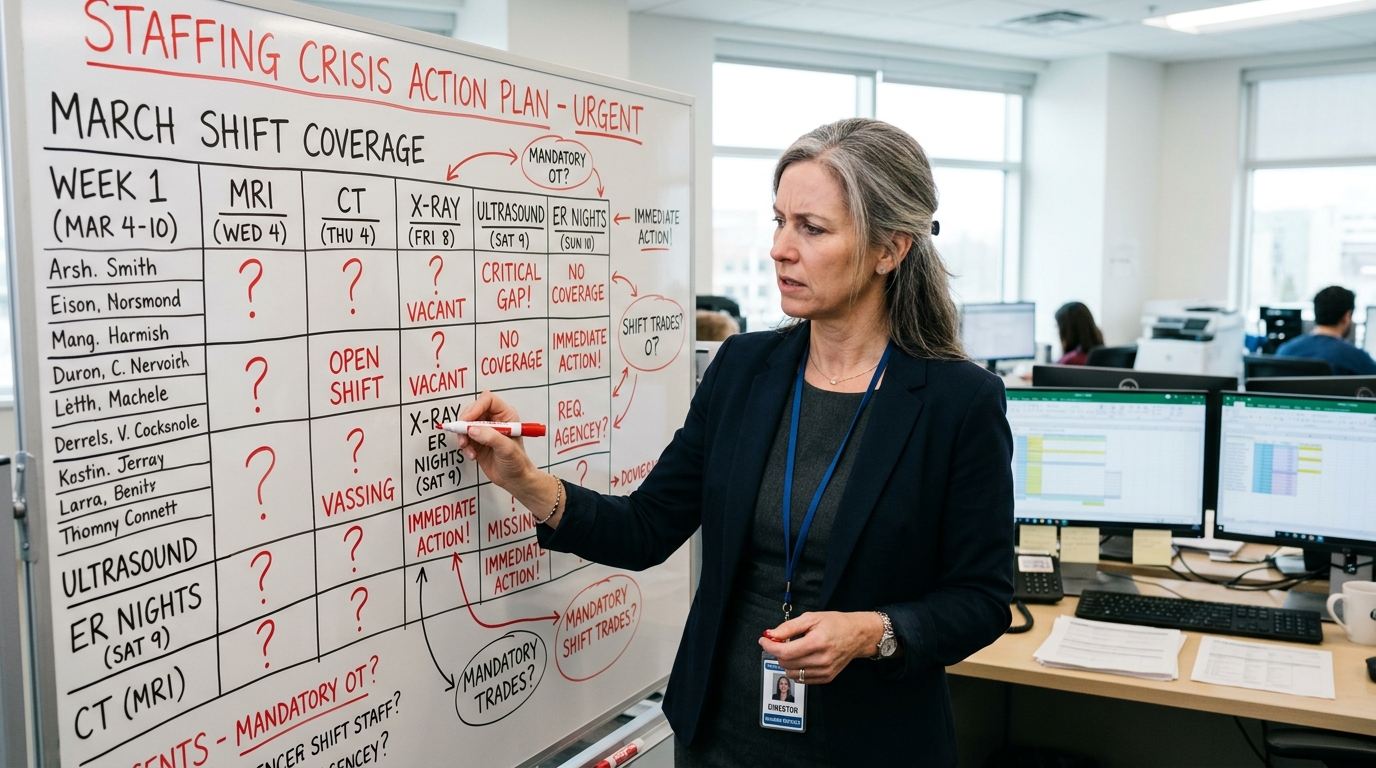
The rad tech shortage is real, and if you're a manager, you're living it.
I managed imaging at a mid-sized hospital for twelve years, and for most of that time, we were short-staffed. Not sometimes. Always. We were constantly recruiting, constantly scrambling, constantly paying premium rates for travel techs we didn't want to be dependent on.
When I finally stopped trying to hire our way out of the problem and started trying to retain our way out of it, everything changed.
That's what I want to share with you: a playbook for managing chronic shortages that actually works. This isn't theoretical. This is built from years of doing this in the real world, from hiring dozens of techs, from losing too many good ones, and from finally figuring out what actually keeps people.
The Wrong Way (Also Known as "What I Did First")
Before I tell you what works, let me be honest about what doesn't.
Hiring bonuses alone don't work. We offered $5,000 signing bonuses. We had people take the bonus, work four months, and leave. Turns out, if your environment is toxic or burned-out, a $5,000 bonus just means they're $5,000 richer when they quit. (And you're often contractually unable to claw it back after a certain period, so you've just given away money to people who left anyway.)
Expecting existing staff to carry extra load doesn't work. I increased expectations on my team thinking we'd "make do" with fewer people. You know what happened? The good ones left because they were tired. The mediocre ones stayed but became resentful. Morale tanked.
Hiring externally without internal development doesn't work. We brought in experienced techs from outside, but we weren't developing our newer techs into experienced ones. You end up constantly replacing people instead of growing them.
Competing purely on salary doesn't work. Sure, compensation matters, but if someone hates their job, you can't pay them enough to stay. We learned this the hard way when we matched competing offers and people still left.
So here's what I started doing instead.
The Retention-First Approach
Okay, I know this sounds simple, but the shift in thinking is profound: stop trying to replace people and start trying to keep them.
This means looking at why people leave. And the reasons aren't what I expected.
The Burnout Factor
Your best techs are leaving because they're exhausted. Not because they don't like the work—they like the work. They're leaving because they're doing the work of 1.5 people and the hospital doesn't seem to care.
The fix: Actually staff appropriately. Not eventually. Now.
This was my biggest lightbulb moment. We were "waiting to hire" to fill a vacancy, pushing the remaining team harder. But every month we waited, someone good left. Then we had to hire two people to replace one, which took longer, which meant more burden on remaining staff, which meant more people left.
I started recommending we hire before people left, not after. Overstaffing by one person felt scary on a budget meeting. But that one person prevented the burnout that was costing us three experienced techs per year. The math worked.
The Autonomy Factor
Good techs want to be trusted. They want to make decisions. They want input on how the department runs.
We started having monthly tech meetings where techs could bring up issues and ideas. Not just vent sessions—actual decision-making. We changed our break schedule because techs suggested a better rotation. We revised a protocol because someone had a better way. We created a mentoring program because a senior tech suggested it.
Did this solve everything? No. But it made people feel heard, and that mattered disproportionately.
The Growth Factor
Techs who can see a future in their job stay. Techs who feel like they're doing the same thing in year five as year one leave.
We created a clear advancement path. Senior tech positions. Specialty certifications we'd pay for. Cross-training opportunities. A formal mentorship program. Not everyone wanted to advance, but people wanted the option.
I also found that many of our techs wanted to grow but didn't know how. So we actually funded CE courses, gave people time off for conferences, and created opportunities to learn. Our CT tech who was interested in interventional radiology? We connected her with our IR department, got her some observational hours, and supported her certification. She's now our most engaged employee and she's never threatened to leave.
Building Your Pipeline
Short-term staffing is a hiring problem. Long-term staffing is a pipeline problem.
Relationships with Schools
This is the single most important thing I did, and I didn't do it until year five. That was a mistake.
I started calling every radiology tech program within fifty miles and introducing myself. I offered to come speak to their students. I offered internship opportunities. I invited students to tour our department.
Most programs are desperate for real-world connections for their students. Your department is an asset to them. Use that.
Over time, we became a "school of choice" for internships. We hired interns. Some of them came to us after graduation. Even the ones who didn't still thought highly of us and referred friends. It created a pipeline that didn't dry up.
Cultivating Referrals
Your current techs know other techs. Create a referral bonus program. Not $500—that's insulting and looks desperate. But $2,000-$3,000 to an employee who refers someone you hire? That's real money, and it incentivizes your people to think about bringing good teammates aboard.
We also made referrals easy. Created a simple form. Made it clear that referring someone doesn't mean you're "responsible" for them. Just signal-boosting.
Staying in Touch with Alumni
That tech who moved for family? That radiographer who went back to school? Stay connected.
We created a simple email list—not sales-y, just occasional updates about what's happening in the department. When a position opened, we'd hear back from former employees. Some came back. Some just felt connected to the place even if they didn't return.
Creative Compensation Beyond Salary
The rad tech shortage means you can't compete purely on salary if your area is competitive. So don't try.
Signing Bonuses, But Strategic
If you do signing bonuses, tie them to retention milestones. First bonus after six months, second after one year. This discourages short-term bouncing.
Student Loan Repayment
Many techs are carrying educational debt. Offering to help with repayment ($2,000-$5,000 per year) is often more valuable than a flat raise because it's targeted at an actual pain point.
Certification Funding
Pay for your techs' specialty certifications. A mammography or CT certification that improves their resume? You're investing in keeping them relevant and engaged.
Flexible Scheduling
This is free or cheap, and it matters enormously. If someone wants to do mostly day shifts, try to make that happen. If someone needs a compressed schedule, explore it. Four tens instead of five eights? Make it work.
One of my best CT techs nearly left because we insisted on rotating shifts. When we switched her to permanent days, she became incredibly productive and stable. The department function didn't suffer. Why? Because happiness is worth something.
Competitive Compensation Analysis
You need to actually know what you're competing against.
I started doing quarterly checks of nearby hospitals and imaging centers. What are they offering? What's their signing bonus? What's the actual total compensation package?
Use databases like Salary.com, Glassdoor, Bureau of Labor Statistics. Call recruiters and ask what they're seeing in the market. Talk to colleagues at other hospitals.
Then be honest: Can you match them? If not, can you beat them on something else—flexibility, culture, growth, scheduling?
If you can't compete on any dimension, you're going to keep hemorrhaging people.
The Long Game
I left management before seeing the complete results of these changes, but I'll tell you what the trends looked like in my last year:
- Turnover decreased from 35% annually to 18%
- We went from hiring constantly to having a waiting list of people wanting to work with us
- Travel tech dependency dropped from 40% of our staff to 5%
- Employee satisfaction scores went up every quarter
- Our sign-on bonuses actually decreased because we didn't need them as much
Not because I solved the shortage. But because I solved the retention problem, which turned out to be 80% of the staffing issue.
What You Can Do Starting Monday
If you're a manager dealing with this right now:
Audit why people leave. Do exit interviews. Talk to people. Find the actual reasons, not the polite reasons.
Fix the #1 reason. Whatever it is—staffing, autonomy, growth, pay, scheduling—tackle it first.
Call a local tech school. Introduce yourself. Offer something. Start the relationship.
Analyze your compensation. Be real about whether you're competitive.
Talk to your team. Ask them what would make them stay. Actually listen.
The rad tech shortage is real, and you can't hire your way out of it. But you can manage your way through it by keeping the good people you have.
That's the actual playbook.
Related Articles

Burned Out as a Rad Tech? Here's How to Reignite Your Career
April 23, 2026

Managing Up: How Rad Techs Can Influence Department Decisions
April 22, 2026

How to Compete With Travel Agency Pay Without Breaking Your Budget
April 22, 2026
Quality Assurance in Radiology: Why QA Culture Affects Retention
April 21, 2026