Interventional Radiology Tech: The Most Exciting Role in Medical Imaging
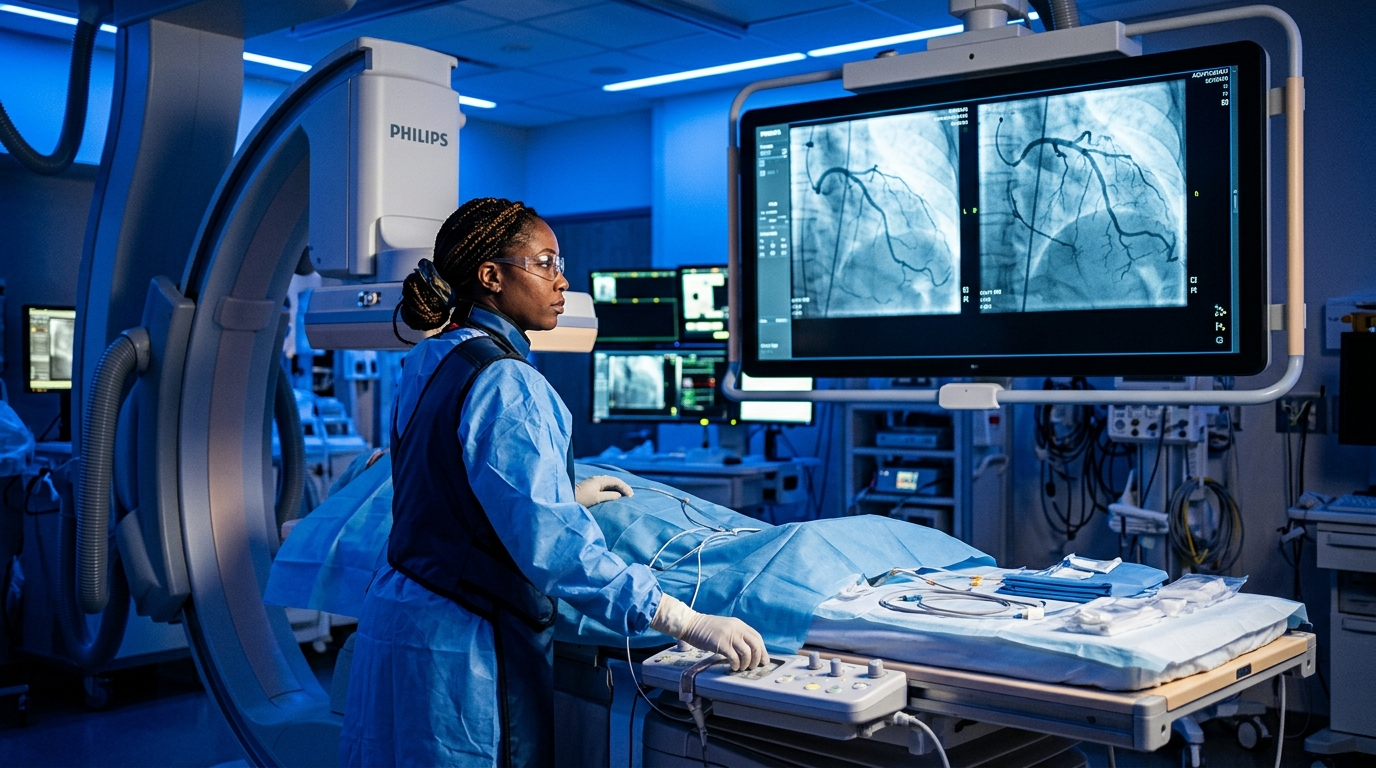
If you've spent your radiology career positioning patients and hitting the button, you might think you know what medical imaging looks like. But if you've never stepped into an interventional radiology suite, you've missed the most dynamic, hands-on, and genuinely thrilling specialty in imaging.
I've been in radiology for over 15 years. I've worked diagnostic rooms, portable exams, ultrasound labs—the whole spectrum. But after rotating through IR during my first year of cross-training, I realized something fundamental: interventional radiology isn't just imaging. It's medicine in real time. It's a team sport where the technologist isn't just documenting what the body looks like—we're actively participating in the solution.
If you're at a crossroads in your career, wondering if there's something more dynamic out there, read on. This might be the opportunity you've been looking for.
What Interventional Radiology Actually Is (And Why It's Different)
Let me be direct: interventional radiology is not diagnostic imaging. We're not taking pictures and handing them off to a radiologist in a reading room. Instead, IR is a team of interventional radiologists and highly trained technologists using imaging—fluoroscopy, ultrasound, CT—as a guide to perform minimally invasive procedures inside the patient's body.
Think of it this way. In diagnostic radiology, imaging is the destination. In IR, imaging is the map, and the procedure is the mission.
This distinction changes everything about the work environment, the skills you need, and frankly, the adrenaline level in the room. You're not waiting for someone else to act on the images. You and your interventional radiologist are the action. The patient comes in with a problem—a blocked artery, a tumor that needs treatment, an abscess that needs drainage—and you're part of the team that solves it in real time.
The result? Patients go home the same day (in many cases), recover faster, and experience fewer complications compared to traditional surgery. It's modern medicine at its best. And we're the ones making it happen.
A Day in the IR Suite: Fast-Paced and Never the Same
Walk into an IR suite at 7:30 a.m., and the energy is different from a diagnostic department. You're doing a quick equipment check—fluoroscopy system, ultrasound machine, pressure injectors, all the specialty equipment—because your first patient is already prepped and waiting.
Your first case might be a femoral artery angioplasty. You're positioning the patient, prepping the groin, helping the interventional radiologist establish sterility, then standing at the table managing the injector, adjusting fluoroscopy angles, calling out vital signs, and handing off catheters and guidewires. Your hands are involved. Your presence matters. If you miss something, the radiologist feels it immediately.
Then the angioplasty is done. You're helping close the puncture site, briefing the recovery nurse, and the patient is on their way to recovery. By 10 a.m., the room is reset and you're prepping for case number two—maybe a liver biopsy today, or a kidney drainage.
The pace is brisk. The variety is genuine. You might do five, six, seven completely different procedures in a single shift. One moment you're assisting with a peripheral vascular intervention, the next you're helping position a patient for a hepatic embolization. The learning curve never really plateaus because you're constantly encountering new anatomy, new pathology, and new techniques.
And the best part? You're literally watching miracles happen. I've seen patients with non-functional kidneys get drainage placements and avoid sepsis. I've watched interventional radiologists save patients from amputation by restoring blood flow. The immediate, tangible impact is something many diagnostic technologists never experience.
The Core Procedures You'll Master
When you transition to IR, you'll quickly become proficient with the bread-and-butter cases:
Vascular interventions dominate many IR schedules—peripheral angioplasties, stent placements, and thrombectomies. You'll become expert at vascular anatomy, guidewire management, and fluoroscopy positioning. Your hands-on role is substantial here.
Embolization procedures are equally important. Whether we're stopping bleeding, closing off a tumor's blood supply, or treating an aneurysm, embolization is a core IR skill. You'll manage catheters, particle injections, and monitor real-time imaging as the radiologist positions devices precisely.
Percutaneous biopsies of organs—kidney, liver, lung, soft tissue—require meticulous positioning and real-time imaging adjustment. You're the technologist keeping the imaging clean and the radiologist informed.
Drainage procedures might sound simple, but they're critical. Infected fluid collections, urine obstructions, bile duct blockages—percutaneous drainage saves patients from surgery. You'll place sheaths, manage catheters, and ensure sterility throughout.
Port insertions and other venous access placements are higher-volume, lower-complexity cases that keep the schedule moving and build fundamental skills.
You'll also encounter biopsies, ablations, vertebral augmentations, and hybrid cases that combine imaging with open intervention. Every case teaches you something.
The Skills That Set IR Techs Apart
Working in IR demands a different skill set than diagnostic radiology, and these skills are genuinely valuable.
Sterile technique is non-negotiable. You're not just in a sterile field—you're maintaining it constantly while helping with interventional work. Your precision matters clinically.
Fluoroscopy mastery goes beyond basic positioning. You're thinking three-dimensionally, understanding how to angle the C-arm to visualize exactly what the radiologist needs, managing real-time adjustments, and minimizing radiation exposure through intelligent positioning and pulsed fluoroscopy.
Patient communication becomes more critical. Your patient is often awake during the procedure, sometimes anxious. Your calm, professional presence reassures them and helps them stay still when it matters most.
Equipment management extends beyond the imaging system. You're familiar with injectors, pressure bags, cautery equipment, and specialty devices. Understanding the technology—not just how to turn it on, but how it functions and its limitations—makes you invaluable.
Critical thinking and problem-solving are daily requirements. Things don't always go as planned. You need to think on your feet, anticipate the radiologist's next move, and adapt when complications arise.
Teamwork is perhaps most important. IR is intensely collaborative. You're working closely with an interventional radiologist, nurses, and sometimes surgical teams. Your communication, reliability, and positive attitude directly affect patient outcomes.
Getting the Credentials: ARRT VI and CI
If you're already an ARRT-certified radiologic technologist, you're halfway there. The next step is pursuing advanced credentials in interventional radiography.
The ARRT Interventional Radiography (VI) certification is the gold standard for IR technologists. It demonstrates competency in vascular and interventional procedures, radiation safety, and patient care specific to the specialty. Most hospitals require or strongly prefer VI certification for full IR roles.
The ARRT Cardiovascular-Interventional (CI) certification is another pathway, particularly if your focus leans more heavily toward cardiac and vascular cases. Many technologists eventually pursue both certifications.
Getting certified typically means several hundred hours of documented IR experience, study, and passing the exam. Most hospitals support this process—some even pay for exam fees. Many offer tuition reimbursement for exam prep courses.
The time investment is real, but the credential pays dividends. Hospitals prioritize VI-certified technologists for scheduling, advancement, and raises. It's a competitive advantage that's immediately recognized across the field.
Compensation and Career Trajectory
Let's talk money. IR technologists typically earn 10-20% more than diagnostic technologists at the same facility. If you're earning $65,000 as a diagnostic tech, expect $72,000-$78,000 in IR—and that's just the starting point.
Lead technologists, those who mentor others and manage equipment and protocols, earn substantially more. Applications specialists—technologists who work for equipment manufacturers—often earn six figures plus benefits. Management positions in IR departments can be equally lucrative.
The earning potential is real, but more importantly, the career growth is tangible. You're not hitting a ceiling after five years. There are clear paths forward: specialization, leadership, vendor relationships, or consulting. The skills transfer well, and facilities value IR experience.
The Physical Realities
I want to be honest about the physical demands. You're wearing a lead apron eight hours a day. Your feet will hurt sometimes. Fluoroscopy procedures involve radiation exposure, though modern IR suites emphasize dose reduction, and your badge monitoring and rotation practices minimize risk.
You'll be standing most of your shift, often in positions that aren't ergonomically ideal. Over time, back and knee issues can emerge if you don't take precautions. Proper footwear, weight management, and core strengthening make a real difference.
The radiation exposure, while managed, is elevated compared to diagnostic radiology. But ARRT-certified technologists understand dose management principles. You'll follow protocols that minimize exposure—distance, shielding, and time optimization—and you'll monitor your exposure through regular badge results.
For most IR technologists, the exciting work and career prospects more than offset these physical considerations. But they're worth acknowledging honestly.
Who Thrives in IR
Not every technologist is right for IR, and that's okay. But if you recognize yourself in this description, IR might be your ideal fit.
You're energized by variety. Doing the same exam all day feels boring. You want every shift to feel different.
You think ahead. You anticipate problems and move to solve them before they become issues. You're naturally proactive.
You communicate well. You're calm under pressure and can quickly brief colleagues on what's happening without being told directly.
You're detail-oriented but not paralyzed by perfectionism. IR moves fast, and you need to keep pace while maintaining precision.
You're genuinely interested in how things work—not just the imaging equipment, but the human body, the pathophysiology driving the case, and the intervention being performed.
You're collaborative. You don't need to be the center of attention, but you want to be part of a team working toward something meaningful.
If this sounds like you, IR is almost certainly worth exploring.
The Future of IR: Growing Opportunities
The IR specialty is expanding rapidly. Hospitals are adding cases, opening new IR suites, and expanding what's possible through minimally invasive techniques. Procedures that used to require open surgery now happen in IR. That trend will continue.
Hybrid operating rooms—suites that combine surgical infrastructure with interventional imaging—are becoming more common. These roles represent the next evolution of IR technology work, blending traditional OR skills with interventional expertise.
Demand for qualified IR technologists exceeds supply in most markets. This is a specialty where jobs are plentiful and facilities are actively recruiting. Your negotiating power is genuine.
The Bottom Line
Interventional radiology isn't just another radiology specialty. It's a fundamentally different way of practicing medical imaging—one where you're directly involved in patient care, where your skills matter immediately, and where the impact is tangible.
After 15 years in radiology, I can tell you definitively: IR is the most exciting, dynamic, and rewarding path I've encountered. If you're looking for something more than diagnostic imaging, if you want hands-on work that matters, if you're energized by variety and challenge, this might be exactly what you're looking for.
The credentials are achievable. The job market is strong. The compensation reflects the expertise required. And the work—the actual work of being part of a team that solves critical patient problems—is genuinely fulfilling.
If this resonates with you, start exploring. Ask your facility about IR rotation opportunities. Reach out to IR departments in your area. Talk to technologists who work in the specialty. The more you learn, the more convinced you'll become that IR might be your next great career move.
Related Articles

Burned Out as a Rad Tech? Here's How to Reignite Your Career
April 23, 2026

Managing Up: How Rad Techs Can Influence Department Decisions
April 22, 2026

How to Compete With Travel Agency Pay Without Breaking Your Budget
April 22, 2026
Quality Assurance in Radiology: Why QA Culture Affects Retention
April 21, 2026