Managing a Multi-Generational Radiology Department
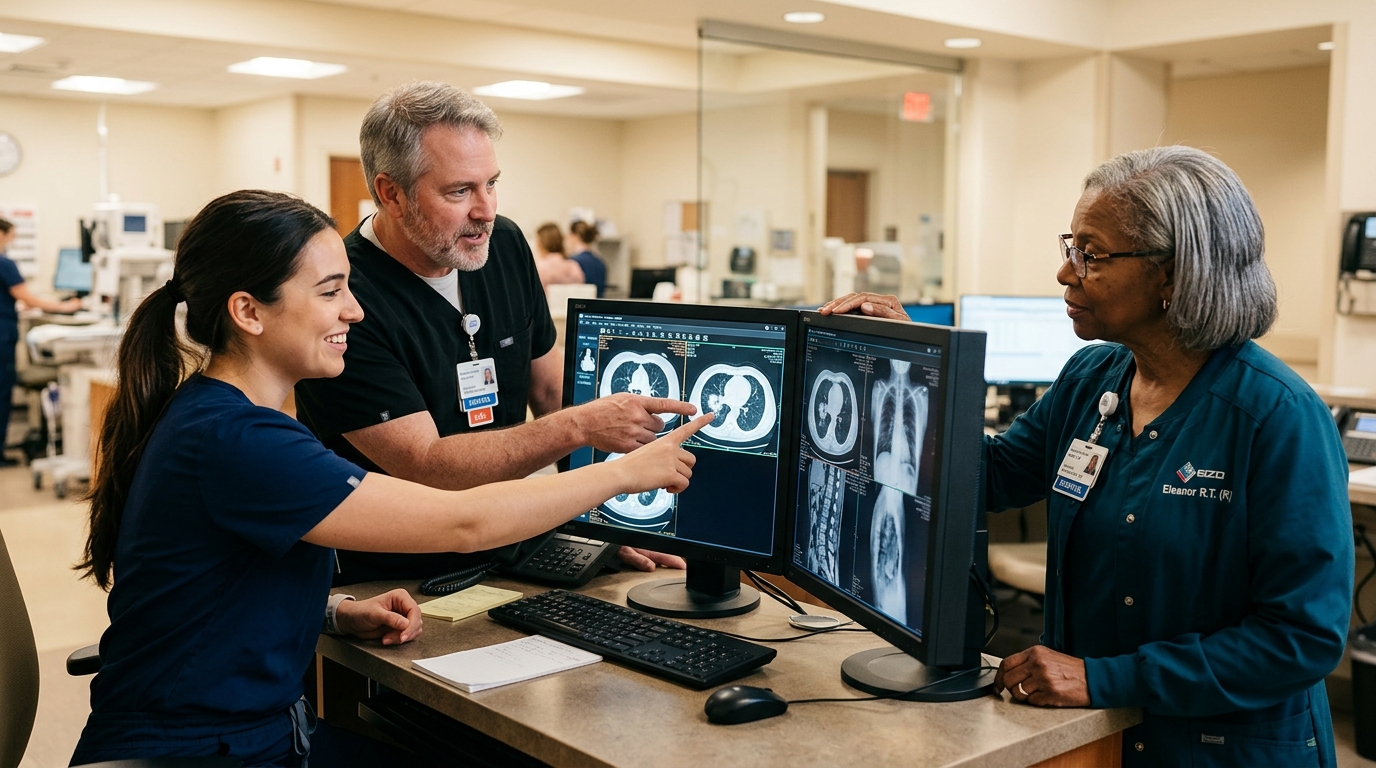
Walk into any radiology department today and you're likely to see a striking range of experience and perspective. The technologist who's been reading portable chest exams since the film era works alongside someone who's never known a world without AI-assisted diagnostics. The senior tech who values face-to-face communication sits near the millennial who prefers Slack. The Baby Boomer who stayed at one hospital for 30 years passes the station of the Gen Z tech already thinking about their next opportunity.
This isn't a problem—it's actually one of the richest assets a department can have. But it requires intentional management.
After a decade in nuclear medicine and working across multiple imaging departments, I've watched the generational dynamics play out in real time. The friction isn't inevitable. In fact, the most cohesive, high-performing departments I've seen are the ones that understand their multi-generational workforce and build systems around it. If you're a department director, supervisor, or manager wrestling with how to keep four generations engaged and aligned, this is for you.
Understanding the Four Generations in Your Department
Before we talk solutions, let's acknowledge who we're actually managing. Your radiology department likely includes Baby Boomers (born 1946-1964), Gen X (born 1965-1980), Millennials (born 1981-1996), and Gen Z (born 1997-2012).
Baby Boomers in your department bring institutional knowledge that's invaluable. They've seen technology evolve from analog to digital. They understand systems, hierarchy, and how to navigate organizational politics. But they may be the first to express frustration with new software or to question why "the old way" isn't good enough anymore.
Gen X technologists are often the quiet backbone of the department—reliable, adaptable, and pragmatic. They bridge the gap between Boomer mentorship and millennial innovation. They typically value autonomy and don't need much hand-holding, but they can sometimes feel overlooked because they're not making a fuss.
Millennials are often early adopters of technology and value purpose-driven work. They want to understand the "why" behind policies and decisions. They may challenge tradition not to be difficult, but because they're genuinely trying to optimize systems. They're also more likely to prioritize flexibility and work-life balance.
Gen Z technologists bring digital nativity and entrepreneurial thinking. They expect continuous feedback, clear career pathways, and they're not afraid to leave if their needs aren't being met. They also tend to be socially aware and value companies that align with their values.
None of these descriptions are rules. They're trends born from different economic conditions, technological landscapes, and cultural moments. But acknowledging them helps you understand why your department might feel like four different workplace cultures trying to coexist.
The Friction Points That Actually Matter
Most generational conflict in radiology departments boils down to a few recurring themes.
Technology adoption is usually the first flashpoint. The Boomer who prefers to mark films with a pen before entering data into PACS isn't being stubborn—they're working from a framework where double-checking physically made sense. The Gen Z tech who wants to automate that step entirely isn't being entitled—they're optimizing for efficiency. Neither is wrong, but without dialogue, you get eye-rolling and resentment.
Communication style differences can feel surprisingly personal. When a Boomer prefers a conversation at the workstation and a millennial prefers a documented email, it's not about respect or disrespect—it's about different comfort zones. But when each generation feels the other is being dismissive of their preferred approach, it erodes trust.
The "dues paying" mentality creates subtle but persistent friction. Some of your senior technologists believe that everyone should start at the bottom, work nights and weekends, and earn their stripes. Meanwhile, your Gen Z staff member is asking, "Why should I sacrifice my mental health for something that could be organized better?" Both perspectives have merit, but they clash when one side assumes the other is just lazy.
Scheduling and work-life balance expectations vary dramatically. Your Boomer technologist may have structured their entire life around the hospital schedule and finds it admirable that others do the same. Your millennial tech built their life specifically to accommodate flexibility and sees inflexible scheduling as punishment. When scheduling becomes a source of perceived inequity, retention suffers.
Career expectations and advancement often create the deepest divide. In previous generations, staying at one hospital for 30 years was the norm and the ideal. Today's younger technologists may see lateral moves, job changes, and career pivots as smart positioning. This isn't disloyalty—it's adaptation to a different economic reality.
Leverage Each Generation's Strengths
Rather than trying to homogenize your department, the winning strategy is deliberate strength-stacking. Each generation has genuine advantages.
Use your Baby Boomers and experienced Gen X technologists as institutional mentors. They know the history of your department, the workarounds, the political landscape, and often the technical nuances that don't make it into manuals. Formalize this by creating mentorship opportunities—not as an afterthought, but as part of their role and recognition structure. If you can remove some of their shift burden to make time for mentoring, even better.
Put your millennials and Gen Z technologists in charge of process improvement and technology integration. They often see problems differently because they haven't been doing things the old way for 20 years. Give them permission to propose solutions, pilot new workflows, and document best practices. This isn't about replacing the way things work—it's about evolving them. And it makes younger staff feel genuinely heard.
Create reverse mentoring programs where a Gen Z tech teaches a Boomer about a new software feature while that Boomer teaches the younger tech about patient psychology or departmental history. These conversations are gold. They build relationships, reduce stereotyping, and create genuine appreciation for different perspectives.
Recognize that Gen X is often underutilized. These are your stable, adaptable middle managers in waiting. Invest in their leadership development. They often don't ask for it, but they respond well to being identified as the connective tissue between other generations.
Build Scheduling Systems That Actually Work
Scheduling is one of the easiest wins for improving generational fit.
Stop using a one-size-fits-all schedule. Instead, offer multiple scheduling options: full-time with stable shifts, part-time, rotating shifts, weekend-focused, or other creative arrangements. Communicate that you're offering choices because you understand different people thrive under different conditions—not because you're trying to force a specific demographic into a box.
Your Baby Boomers who've spent 20 years on a Tuesday-Thursday-Saturday rotation might prefer to keep it. Your Gen Z tech might prefer Monday-Wednesday-Friday. Your millennial tech might want to compress their hours into four 10-hour days. The magic isn't finding the perfect schedule—it's reducing the stigma around variety.
This also solves one of the biggest retention problems: younger staff don't feel stuck in a system designed for someone else's life stage.
Create Generation-Inclusive Training Programs
How you train and develop staff should vary based on learning preferences, not by trying to force everyone into the same method.
Your Boomers may prefer structured, in-person training with a clear expert. Gen Z may prefer self-directed online learning with immediate feedback. Millennials might want a blend. Accommodate these preferences where possible. Some of the most effective training I've seen combines multiple methods: an experienced tech demonstrates a procedure, a younger tech documents it with video and creates a quick-reference guide, and then multiple people learn from both mediums.
Create clear advancement pathways and actually talk about them. Don't assume people know what they need to do to move forward. This is especially important for younger staff who may have been burned by unclear expectations elsewhere.
Communication Across Four Generations
Invest in communication infrastructure that works for everyone.
Yes, your Boomers might prefer face-to-face conversations. Yes, your Gen Z staff might prefer text. The solution isn't to privilege one over the other. It's to use multiple channels intentionally. Important policy changes? Announce them in a team meeting, follow up with a memo, and post them in your staff channel. Urgent scheduling issue? A quick Slack message works, but document it afterward for the people who prefer written records.
Make feedback bidirectional and continuous. Annual reviews feel outdated to younger staff and insufficient to keep them engaged. Monthly check-ins—even 15 minutes—where you're asking "How's it going, what's working, what isn't?"—these build trust across generations.
Address Generational Stereotyping Head-On
The single most important thing a manager can do is name the elephant in the room: generational friction often sounds like judgment.
When someone says "This generation just expects everything handed to them," or "Nobody wants to work hard anymore," or conversely, "The old guard just resists any change," you're in stereotype territory. Interrupt it. Not punitively, but clearly.
Say something like: "I've noticed we sometimes make assumptions about what people want or why they do things. What's actually true in this situation?" Create psychological safety for people to explain their perspective without it being interpreted as a character flaw.
The Boomer who wants to double-check records isn't inflexible—they value thoroughness. The Gen Z tech who wants to leave at 5 PM isn't lazy—they're protecting their wellbeing. The millennial who asks "Why?" isn't questioning authority—they're trying to understand the system.
Policies That Bridge Generations
Look at your existing policies with a generation lens. Dress code standards. Continuing education requirements. Overtime expectations. Availability policies. Recognition and advancement criteria.
Do your policies inadvertently advantage one generation over another? For example, if continuing education only happens during daytime hours, you're excluding your per diem and part-time staff—who skew younger. If your most prestigious assignments go to people willing to work nights and weekends, you're rewarding a pattern that only certain life stages support.
This isn't about lowering standards. It's about whether your standards are actually measuring what you care about—competence, commitment, quality work—or whether they're measuring a narrow version of career devotion.
Building the Future
The most successful radiology departments I've worked in treat generational diversity as a feature, not a bug. They recognize that a 65-year-old Boomer has irreplaceable skills alongside a 25-year-old Gen Z tech. They build systems—scheduling, communication, training, advancement, mentoring—that actually serve multiple generations simultaneously.
This takes intention. It requires managers and leaders who resist the urge to create a department in their own image and instead ask: "How do we create a culture where all four generations can thrive?"
When you get it right, what emerges isn't a workplace divided by generational fault lines. It's a department with genuine cross-generational respect, where institutional memory and innovative thinking reinforce each other, where no one has to pretend to value the system above their own wellbeing to belong.
That's not just better for your staff. It's better for your patients, your department's reputation, and your bottom line.
If you're managing multiple generations and want to share what's working in your department—or what's not—I'd love to hear from you. The insights from real leaders in the trenches shape how we all do better work.
Related Articles

Burned Out as a Rad Tech? Here's How to Reignite Your Career
April 23, 2026

Managing Up: How Rad Techs Can Influence Department Decisions
April 22, 2026

How to Compete With Travel Agency Pay Without Breaking Your Budget
April 22, 2026

Travel Rad Tech Life: The Honest Pros and Cons Nobody Tells You
April 21, 2026