The ROI of Investing in Rad Tech Continuing Education
I've worked in forty-three hospitals across twelve states over seven years as a travel rad tech. I've seen everything. The pristine facilities with cutting-edge equipment and miserable staff. The older hospitals with great cultures and techs who actually wanted to show up. I've worked night shifts in Maine and day shifts in Arizona. I've subbed for colleagues at major medical centers and small critical access hospitals. And I noticed something that most of them missed.
The hospitals that invested seriously in their techs' continuing education? They were different. Not always fancier. Not always bigger. But different in a way that mattered. The techs were happier. The turnover was lower. The scans were better. The whole department ran smoother.
So I did what I always do as a travel tech—I paid attention, asked questions, and tried to understand why. After years of observing these patterns across different settings, I went back to school, got my educator credentials, and started helping hospital systems think through education strategy. Now I see the ROI numbers behind what I observed anecdotally. And they're compelling.
The Real Cost of Turnover (And Why Education Matters)
Let me start with the math that most hospital administrators won't face head-on. Replacing a single rad tech costs money. Real money.
The most conservative estimates put the cost of replacing one rad tech at $25,000 to $40,000. That's recruitment, onboarding, lost productivity while the new person learns your systems, and the cost of internal people's time to train them. Some places I've worked estimated it closer to $50,000 when you factor in everything.
But here's what's interesting: the cost of retaining a rad tech through continuing education investment? Significantly less.
Consider a mid-size hospital with fifteen rad techs (a reasonable size for most settings). If you're losing two techs per year due to burnout, stagnation, or lack of advancement opportunity, you're spending $50,000 to $100,000 annually on replacement costs. That's not counting the disruption, scheduling nightmares, or the quality dips while learning curves happen.
Now imagine that same hospital dedicates $8,000 per year per tech to continuing education. That's MRI certification support, CT advancement, specialized training, conference attendance, and in-service education. For fifteen techs, that's $120,000 annually. Seems expensive, right? But if it drops your turnover from two people annually to maybe one every three years, you're saving $30,000 to $50,000 annually. You also get productivity gains, better quality imaging, and less scheduling stress.
The ROI isn't hypothetical. It's measurable.
The Retention Engine I Witnessed
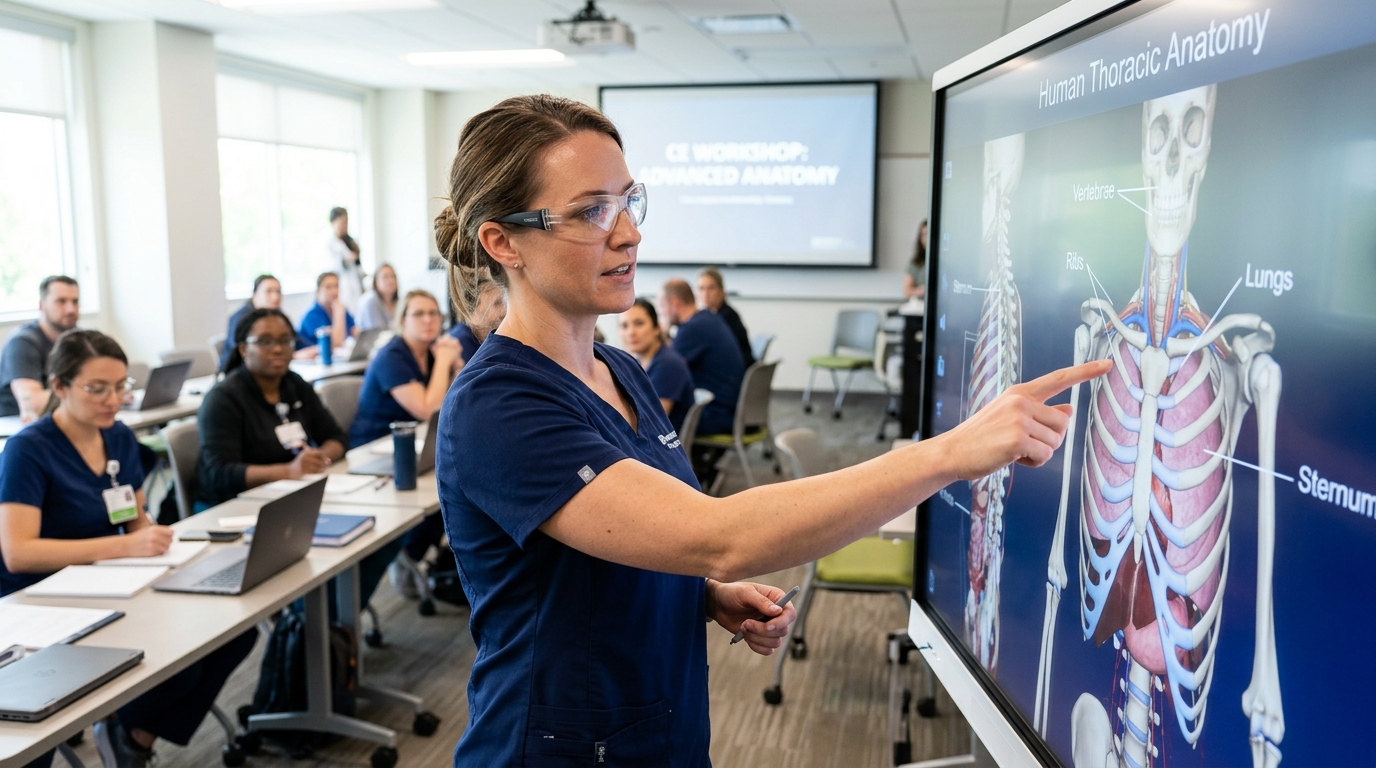
During a three-month assignment in Portland, I worked at a hospital that had made continuing education a core value. Every staff rad tech got $2,500 annually for education. Every tech was expected to advance at least one credential within five years. CME courses were paid. Conference attendance was supported. Lunch-and-learns were regular.
Turnover there was brutal in only one direction: people from other departments wanted to transfer into radiology because we were known as the place that invested in people.
I asked the manager about it once. She said, "If I'm spending fifteen grand a year on someone's education, they're going to think about the value I place on them. They're going to stay longer. And when they do eventually leave, they'll be better trained, so they'll have better opportunities outside. That's worth celebrating, not resisting."
That perspective changed things for me. Education isn't a cost—it's a vote of confidence. Techs feel that. It shifts something in their psychology about where they work.
Compare that to another hospital where continuing education was "allowed" but not prioritized. Techs had to request time off for courses. The hospital covered sixty percent of costs but made the approval process administrative and slow. Turnover was the industry average at best—people left because they felt invisible and underdeveloped.
Same sized facility. Similar resources. Different culture around education. Completely different outcomes.
What Education Investment Actually Delivers
It's not just about staying put longer. There are cascading benefits that matter.
Quality improvements come fast. When techs are engaged in learning, their technical skills sharpen. They learn about protocol optimization. They understand why we're using certain parameters. They start contributing ideas about workflow improvements instead of just executing tasks. I've seen image quality scores improve within six months of implementing serious education programs. That directly impacts patient care and diagnostic accuracy.
Problem-solving gets better. A tech who's just doing their job will call IT or the manager when equipment acts weird. A tech who's invested in understanding their equipment will troubleshoot. They'll know the difference between a calibration issue and a software glitch. They'll save your department hours of downtime.
Recruitment becomes easier. This might be the most underrated benefit. When your hospital has a reputation for developing rad techs, people want to work there. You become the place people apply to, not the place people apply from. I've talked to techs who specifically chose a hospital because they knew it had a strong education program. That's a competitive advantage you can't buy.
Younger techs stay longer. This is crucial. Millennials and Gen Z techs—your future workforce—care about growth. They don't want a static job. They want a career path. A hospital that invests in education offers that. I worked with a young woman who got her ARRT, then her CT certification, then her MRI certification all while employed at the same hospital over seven years. She could've moved three times and probably made more money. But she stayed because the hospital kept investing in her future. She became a supervisor. That's what retention looks like when you do it right.
The Types of Investment That Actually Work
Not all education spending is equal. I've seen hospitals throw money at stuff that doesn't stick.
The most effective investments I've observed are:
Certification advancement programs. Structured support for techs pursuing CT, MRI, nuclear medicine, or mammography credentials. This works because it's tangible. It's a definable goal. A tech knows what they're working toward. Some hospitals cover full tuition. Others do 75 percent and ask the tech to contribute. Both work—the contribution model actually increases completion rates because techs are psychologically invested.
In-service education with protected time. Monthly lunch-and-learns where guest speakers, radiologists, or senior techs teach about new protocols, emerging technology, or clinical topics. What makes this work is the commitment: this is protected time. People aren't pulled to cover shortages. It's valued.
Conference attendance. This is expensive but worth it. A tech who attends ASRT conference comes back energized. They've networked. They've learned. They've seen what other hospitals are doing. They feel part of a larger professional community. The attitude shift is real. Two techs going to a conference per year, covering registration and travel, costs maybe $5,000. The morale boost is worth triple that.
Cross-training and internal expertise development. Some of the best education is right in your department. A senior MRI tech teaching others about artifact recognition. A CT specialist showing newer techs about dose optimization. This doesn't cost money—it costs time and organizational commitment. But it builds expertise internally and positions senior techs as mentors, which they find deeply satisfying.
Online learning subscriptions and webinars. This is the most accessible entry point for smaller hospitals. Subscribing to ARRT preparation courses, specialized imaging training, or general radiology education platforms costs a few thousand annually and lets every tech access learning whenever. Lower cost than conference travel but still meaningful.
The Real Talk About Implementation
Here's what I've learned: the education program itself matters less than the commitment behind it. A hospital can have a beautiful education budget and still fail if the message is "you can do this on your own time" or "we approve education that's directly work-related, nothing broader."
The hospitals that got real ROI framed education differently. It wasn't a benefit. It was core to the job. Part of your expectations was that you'd engage in continuous learning. Part of the hospital's commitment was supporting that. It was reciprocal.
I worked one assignment where the manager told new hires, "This hospital is going to invest in your development. We expect you to take that seriously. We'll cover the costs, provide the time, give you support. But you've got to engage. You can't take this for granted." That clarity shifted everything. People didn't waste that investment.
The also implemented what I call "education conversations." Quarterly, each tech talked with their manager about learning goals. What was next? What interested them? What did they want to develop over the next year? This turned education from a bureaucratic process into a personal development conversation. Engagement soared.
The Compounding Effect Over Time
Here's what I find most interesting about education ROI. It compounds.
Year one: you invest in education, retention ticks up slightly, quality improves a little. Year two: newer techs see that advancement is possible, they're more engaged, your team's knowledge deepens. By year three or four, you've got a team where most people have been there multiple years, many have additional certifications, and the culture is built around growth.
Compare that to a hospital that ignores education. Year one through year four? Constant turnover. Constant training new people. Constant explanation of your systems and culture. You're always behind.
The compounding effect means education ROI doesn't peak in year one. It accelerates over time. A three-year investment might look okay. A five-year investment looks really good. A seven-year investment looks transformative.
What This Means for Your Department
If you're a director or manager reading this, here's the simple version: continuing education isn't a nice-to-have. It's an ROI engine. Every dollar spent on education can save you multiple dollars in turnover costs while simultaneously improving quality and morale.
If you're a rad tech, this is your permission to ask for education. To expect it. To see it as something you deserve and your hospital should provide. Hospitals that invest in their people are worth staying at. They're worth working harder for. They're worth building your career with.
The best departments I've worked in weren't the fanciest or the newest. They were the ones where someone in leadership understood that rad techs don't just execute protocols—they're professionals who need room to grow. And when that understanding gets translated into actual budget and time, everything changes.
That's worth a lot more than the spreadsheet shows.
Related Articles

Burned Out as a Rad Tech? Here's How to Reignite Your Career
April 23, 2026

Managing Up: How Rad Techs Can Influence Department Decisions
April 22, 2026

How to Compete With Travel Agency Pay Without Breaking Your Budget
April 22, 2026
Quality Assurance in Radiology: Why QA Culture Affects Retention
April 21, 2026