PET/CT Technologist: The Dual-Modality Specialist
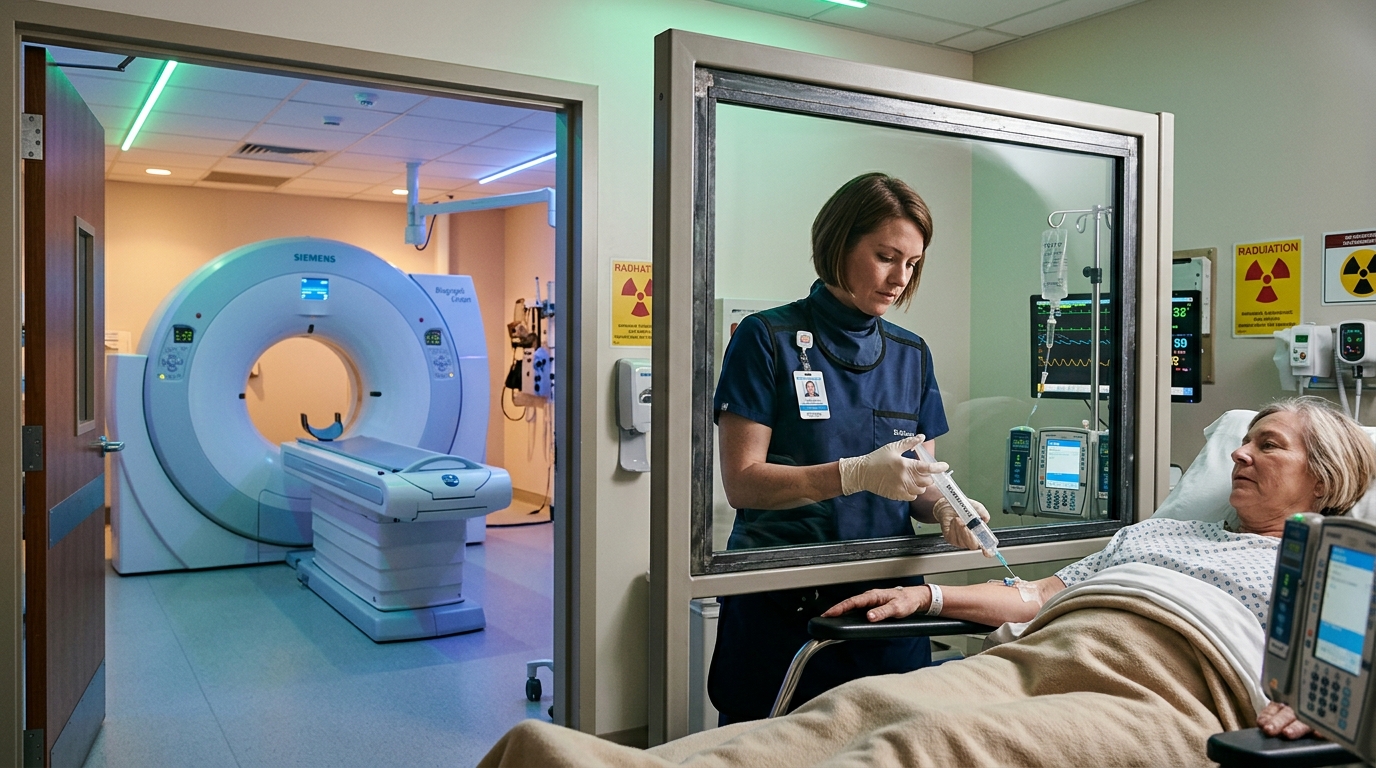
I've been doing nuclear medicine imaging for twelve years, and I've watched the demand for PET/CT technologists go from "good career option" to "where do we even find these people?" In the last few years, I've fielded calls from facilities asking if I know any qualified PET/CT techs willing to relocate. One hospital actually offered a signing bonus.
This isn't a coincidence. PET/CT is a booming modality—it's critical for oncology, neurology, and cardiology imaging, and hospitals are investing heavily in the equipment and expertise. But there aren't enough techs trained to run it. The bottleneck is real, and if you're considering a specialty in radiology technology, you should understand why PET/CT is actually a remarkable career opportunity right now.
Let me walk you through what the job is actually like, how you get there, what it pays, and why hospitals are actively recruiting for this role.
What PET/CT Actually Is (And Why It Matters)
First, let's be clear about what you're actually doing as a PET/CT technologist.
PET/CT is a hybrid imaging system that combines positron emission tomography (PET) with computed tomography (CT). In practical terms: you're administering radiopharmaceuticals (radioactive tracers), positioning patients, and operating equipment that creates images showing metabolic activity and anatomical detail simultaneously.
This is different from conventional radiology. You're not just taking pictures of anatomy—you're imaging function. You're seeing where cancer is active, where blood flow is compromised, where amyloid is accumulating in the brain. The clinical utility is enormous, which is why every facility with serious oncology or neurology programs wants PET/CT capability.
From a technologist perspective, it's fascinating work. You're using your knowledge of anatomy, positioning, radiation safety, and equipment operation—but you're also thinking about tracer biodistribution, patient preparation, image optimization. There's intellectual engagement that some techs find incredibly rewarding.
The work itself is methodical. Patient arrives, you review history and contraindications. You administer the radiopharmaceutical intravenously. Patient waits (30-90 minutes typically) while the tracer distributes throughout their body. You position them on the scanner, acquire images, send them to the radiologist. It's not frantic like busy emergency radiology, but it requires precision and attention to protocol detail.
The Certification and Education Path
This is where the conversation gets practical, because certification requirements will determine if this is a realistic goal for you.
There are two main pathways to becoming a PET/CT technologist:
Nuclear Medicine Technology certification (CNMT). This is the foundational credential. You need either an associate degree in nuclear medicine technology from an accredited program, or you take a specific educational path that meets ARRT (American Registry of Radiologic Technologists) requirements. Then you pass the CNMT exam. The exam covers nuclear physics, radiopharmaceuticals, instrumentation, patient care, radiation safety, and image acquisition. Most programs are 2-4 years depending on whether they're associate or certificate programs.
ARRT certification as a radiographer, then PET/CT specialty certification. If you're already an RT (radiologic technologist), you can pursue PET/CT imaging certification through ARRT. This requires documented clinical experience in PET/CT (usually 24+ months) and passing the PET/CT specialty exam.
I went the nuclear medicine path—I completed an associate degree in nuclear medicine technology, became CNMT certified, and then added PET/CT expertise through on-the-job training at my first facility. That was the common path 12 years ago.
Today, pathways are more flexible. Some techs come from radiography backgrounds and transition. Some pursue nuclear medicine directly. The important thing: you need formal training and credentialing. This isn't something you pick up casually.
The math on education: if you're starting from high school, nuclear medicine associate programs are typically 2-3 years. If you're already an RT, adding PET/CT certification is faster—usually 6 months to 2 years of clinical experience plus exam prep.
It's an investment, but the return is genuine.
What PET/CT Technologists Actually Make
Let me be direct: compensation is one of the best reasons to pursue this specialty.
In 2026, nuclear medicine technologists in the U.S. earn a median salary around $70,000-$75,000. PET/CT specialists typically earn at the higher end of that range, often $75,000-$85,000+ depending on location, facility type, and experience. In major metro areas or at academic medical centers, I've seen PET/CT techs earn $90,000+.
Compare that to general radiologic technologists, who median around $60,000-$65,000. That's a $10,000-$20,000+ differential for a specialty. And the differential is widening because demand keeps growing.
Some facilities are now offering sign-on bonuses for experienced PET/CT techs—sometimes $5,000-$10,000 just to take the job. I haven't seen that for general x-ray techs. Relocation bonuses are increasingly common.
The financial argument for pursuing PET/CT is straightforward: more specialized training translates to meaningfully higher compensation and more job security.
Why Demand Is So High (And Likely Staying High)
Understanding why demand is high helps you understand the career stability.
PET/CT is driving real clinical value. Oncologists use it for cancer staging and restaging. Cardiologists use it to assess myocardial viability. Neurologists use it to differentiate Alzheimer's disease from other dementias. As our aging population grows and these specialties expand, demand for PET/CT imaging grows with it.
Additionally, PET/CT is capital-intensive. A PET/CT scanner costs millions. Most facilities don't have one—you need a substantial radiology/imaging program to justify the investment. That means PET/CT is concentrated in larger hospitals, academic medical centers, and specialized imaging facilities. Those places typically have well-funded imaging programs and real recruitment budgets.
I've talked to recruitment coordinators from five different health systems in the last 18 months. Every single one said they have open PET/CT positions they can't fill quickly. One told me she has two open PET/CT positions and they've been hiring for nine months. That's not common for imaging specialties.
The demand-to-supply ratio is real, which means job security and leverage when negotiating compensation or working conditions.
What the Job Is Actually Like Day-to-Day
I want to be honest about what the work feels like because it's not for everyone.
Your days are usually structured and somewhat predictable, which is nice. You're not responding to emergencies or handling trauma. Your schedule is typically daytime—most PET/CT centers operate business hours, not 24/7. That's a genuine quality-of-life advantage over emergency departments.
The patient population tends to be more cooperative than in general radiology. You're not handling acutely ill patients. Your patients are there specifically for a planned imaging study. Most are stable, oriented, and able to follow instructions. That makes the clinical environment calmer.
The work is repetitive—you're acquiring similar scans repeatedly throughout the day. If you like routine and precision, that's satisfying. If you need constant variety, you might find it monotonous.
There's downtime built in. While patients wait for tracer uptake, you're not constantly moving. You have administrative time, protocol review time, and communication with radiologists. Some techs love this natural pacing. Some find it frustrating.
Radiation safety is a constant mindset. You're working with radioactive materials, following strict safety protocols, monitoring radiation exposure, and managing contamination concerns. If attention to safety details is already part of your nature, this is your space. If you're sloppy with protocols, this won't be comfortable.
The actual positioning and scanning is technically demanding. You need strong anatomy knowledge because positioning is critical—a poorly positioned patient means poor-quality diagnostic images. You need to understand how tracer distribution affects image quality. You need to troubleshoot equipment issues.
Overall: it's intellectually engaging, relatively calm, well-compensated, and offers legitimate job security. The trade-off is it lacks the variety and adrenaline some techs want.
How to Position Yourself for These Jobs
If you're considering this path, here's how to stand out:
Get certified. Don't try to get a PET/CT job without formal credentials. Facilities want CNMT-certified techs or RTs with PET/CT specialty certification. Credentials matter here.
Emphasize precision and attention to detail. In your interviews and resume, highlight experiences where you demonstrated meticulous attention to protocol. PET/CT is detail-oriented work.
Show interest in learning. Nuclear medicine and PET/CT are evolving fields. Radiopharmaceuticals are changing, equipment is improving, imaging applications are expanding. Show that you're genuinely interested in staying current.
Get clinical experience. If you're pursuing this from an RT background, even some observational experience in a PET/CT center helps with your job applications. It shows you understand the workflow and you're serious about the specialty.
Be geographically flexible. PET/CT jobs are concentrated in specific locations—major metro areas and academic centers. If you're willing to relocate, your opportunities expand significantly. If you're tied to a small town, finding a PET/CT position will be harder.
The Real Talk on Future Demand
I'm confident demand for PET/CT technologists will remain strong for the next 10-15 years. The modality is becoming more central to oncology and neurology imaging. Cancer incidence isn't decreasing. Alzheimer's diagnosis is becoming more routine.
However, I'd be naive to ignore emerging technology. There's research into alternative imaging modalities, improvements in artificial intelligence for image analysis, and evolution in how imaging supports clinical care. None of that threatens PET/CT in the near term, but it's worth being aware that your career isn't frozen in time.
The smart move: pursue PET/CT because it's genuinely interesting work with strong demand and good compensation. Build skills beyond just operating the scanner—understanding the clinical applications, learning about new radiopharmaceuticals, developing expertise in image optimization. Make yourself valuable enough that demand stays with you.
The Bottom Line
If you're considering specialties in radiologic technology and you want excellent compensation, strong job security, and interesting technical work, PET/CT should be on your list. It requires more education than entry-level radiography, but the return is real.
Hospitals are actively recruiting for these positions. You won't have a hard time finding work. You'll have options. That's rare in healthcare imaging right now, and it's worth taking seriously.
Related Articles

Burned Out as a Rad Tech? Here's How to Reignite Your Career
April 23, 2026

Managing Up: How Rad Techs Can Influence Department Decisions
April 22, 2026

How to Compete With Travel Agency Pay Without Breaking Your Budget
April 22, 2026
Quality Assurance in Radiology: Why QA Culture Affects Retention
April 21, 2026