Radiation Safety Culture: Why Your Best Techs Care About More Than Speed
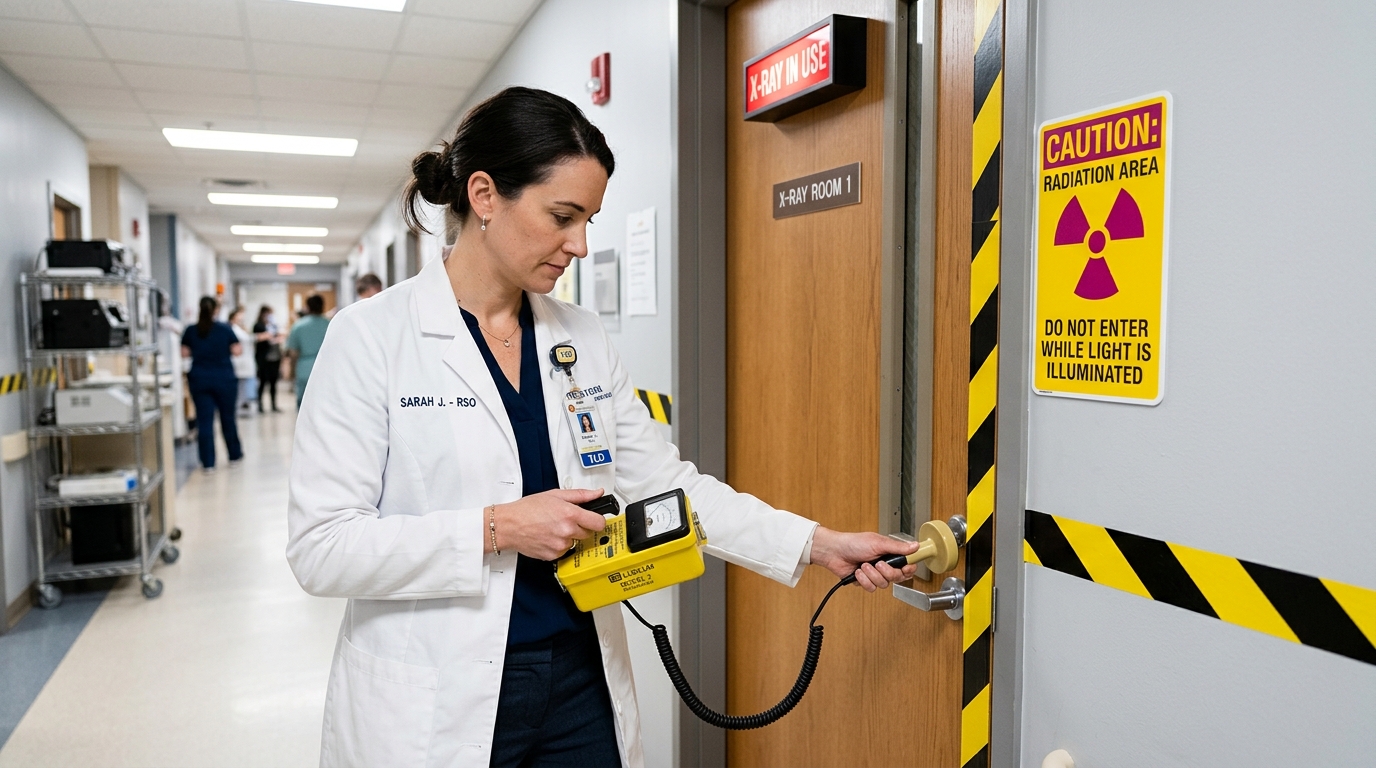
I spent the first three years of my nuclear medicine career trying to be fast. Not reckless—I followed the rules. But I was young, I was trying to impress my preceptor, and I had this underlying belief that the faster I could work, the less radiation I'd be exposed to. Which is true, technically, but it's also a limited way of thinking about radiation safety.
Then I met Patricia, a senior tech who'd been doing nuclear medicine since 1989. She was slow. Methodical. Almost meditative about the way she prepared radiopharmaceuticals. Patients would comment that she was "thorough." Management would note that she had the best procedure documentation in the department. And when we did the annual dosimetry reviews—the checks where they measure how much radiation exposure each tech has accumulated—Patricia's badge numbers were consistently the lowest in the department, despite having the same number of procedures as the rest of us.
I asked her about it one day. She said, "Speed comes from knowing your environment so well that you don't have to think about the basics. But if you're rushing, you're not thinking about the bigger picture. You're sacrificing optimization for velocity."
That hit differently when I was 28 years old and realizing I had about 40 more years of career ahead of me. I'd been thinking about radiation exposure in months or years. Patricia was thinking about it in decades.
The Elephant in the Room: Radiation Dose Is Cumulative
Let's start with something that gets glossed over in basic training but should be front and center for every tech: radiation damage is cumulative and largely irreversible.
If you get a high dose in one year, your body can recover from some of that. But the damage from repeated lower exposures year after year compounds. A tech who averages 2 rem per year over 30 years has accumulated 60 rem of exposure. There's no current guideline saying that's "safe." It's within occupational limits, but it's also creating a trajectory that nobody really wants to test long-term.
Here's what scares me: we don't have 50 years of follow-up data on techs who've been practicing in the era of high-volume imaging. We have some data. We know that some techs develop thyroid issues, lens opacities, and other radiation-related conditions. But we're still collecting data on what normal long-term exposure actually does.
That should matter to you. It should matter a lot.
When I was younger, I thought of radiation safety as something that applied to patients. Minimize patient dose, of course. But tech exposure? That was just part of the job. Everyone accepted it. Nobody talked about it like it was a choice.
Now, after 15 years in nuclear medicine, I think of it differently. My exposure is a choice. It's a series of small choices about how I set up my workspace, how quickly I move, how much shielding I use, how often I check my dosimetry.
What ALARA Actually Means (And Why Your Preceptor Isn't Explaining It Right)
ALARA stands for "As Low As Reasonably Achievable." You've probably heard it. You've probably nodded along during safety training and moved on.
Here's what it actually means: you're supposed to optimize your work so that your exposure is as low as possible while still doing the job competently. Not just "within limits." Reasonably low.
The key word is "reasonably." This isn't about being paranoid or working so slowly that you're inefficient. It's about intentional choices that lower exposure without compromising patient care.
In nuclear medicine, ALARA looks like this: I use my syringe shield 100% of the time. Always. Even for preparations that are lower activity. I position myself behind lead shielding when I'm drawing radiopharmaceuticals. I never ever hold a syringe of radioactive material without the shield, even for 10 seconds. I keep multiple shields at my workspace so I don't have to reach across hot materials.
I time myself on procedures. If something usually takes three minutes and it's taking me seven, I'm probably being inefficient, and inefficiency means more exposure. But I'm also not rushing. I'm doing things once, correctly, the first time.
I check my dosimetry badge monthly instead of waiting for the quarterly report. If I'm seeing numbers that are trending up, I'm looking at what changed in my workflow and adjusting before it becomes a problem.
None of this is complicated. But it does require that you actually think about safety instead of just following a checklist.
The Techs Who Skip This Are the Ones Who Burn Out
I've noticed something over the years. The techs who get injured—who develop radiation-related conditions, who end up with health complications—they almost always have one thing in common: they stopped thinking about safety. At some point, they accepted that "that's just what happens" in this field, and they normalized taking risks.
I had a colleague, Marcus, who was brilliant. Faster than anyone I'd ever worked with. But he was also confident in a way that made him careless. He'd hold radiopharmaceuticals without a shield because the dose was "small." He'd skip certain safety steps because "we've always done it this way." He'd come to work sick because the department needed him.
By year eight of his career, Marcus developed thyroid issues that required medication. His dosimetry numbers had been creeping up year after year, and nobody—including him—was treating it like an anomaly that needed to be corrected.
The sadest part? Marcus got injured because of choices he made when he felt invincible. And now, in his early 40s, he has to manage a chronic condition that he would've avoided if he'd been as careful with his own safety as he was with his patients'.
The techs who stay healthy are the ones who treat their own radiation exposure with the same gravity they treat patient exposure. They understand that their long-term health is a professional responsibility.
The Industry Conversation We're Not Having
Here's the thing that nobody in hospital administration wants to say out loud: we don't have great long-term data on tech burnout and radiation injury because techs are often reluctant to report it.
There's a culture—I don't know how else to describe it—where acknowledging that radiation exposure is affecting you is seen as a weakness. As if you're not "cut out" for the job. So techs develop conditions, manage them quietly, and don't connect the dots to their career.
I've had conversations with senior techs who told me in confidence that they've had health issues they attributed to radiation exposure, but they never reported it because they didn't want to be "that person" who was complaining about occupational hazards.
That's backwards. If you're developing health issues from your exposure, that's data. That's important information that should feed back into safety protocols and environmental assessment. But the shame around it is so strong that it doesn't happen.
I want to change that conversation. Not because radiation is inherently evil—it's not. Nuclear medicine is an incredibly valuable specialty. But because techs deserve to work in an environment where taking care of yourself is valued as much as working efficiently.
Building a Culture Where Safety Wins
The departments where I've felt safest—where the radiation exposure is lowest and the protocols are strongest—they all have one thing in common: the senior techs care about safety as much as getting the work done.
When you have even one experienced tech who models good practices, it changes the whole department. Patricia didn't nag people about safety. She just did things the right way. And over time, younger techs watched her and started doing things that way too.
This is how culture changes. Not with a memo from administration. Not with a new policy. But with visible, consistent modeling from respected people.
If you're an experienced tech, that's partly on you. You have influence. The way you handle your own safety and the way you coach new people on theirs ripples out.
If you're newer, pay attention to who the safest techs are. Not the fastest. The safest. Watch what they do differently. Ask them questions. Learn from them.
The Math That Matters
Let's get specific. An average tech in diagnostic radiology might accumulate 0.5 to 1 rem per year. A nuclear medicine tech might see 2 to 3 rem per year. An interventional radiology tech might see significantly higher exposure.
Current occupational limits allow up to 5 rem per year. But—and this is important—the recommendation from radiation safety experts is to keep exposure well below that. The goal should be 1 rem per year or less.
If you're a nuclear medicine tech accumulating 2 rem per year and you work for 40 years, you've got 80 rem of cumulative exposure. We don't have perfect data on what that means long-term, but the research suggests increased risk of cancer, thyroid disease, and cataracts.
Now, a tech who's optimized their practice, who's careful about shielding and positioning, might be able to reduce that to 1 rem per year. Over 40 years, that's 40 rem instead of 80. That's a meaningful difference in your long-term health trajectory.
This is why the best techs care about safety. It's not about being paranoid. It's about recognizing that 40 more years of health is worth the effort of being intentional about your practices.
What You Actually Do Differently
So what does this look like in practice?
You use maximum shielding, always. Syringe shields, vial shields, lead aprons, L-blocks—whatever reduces your exposure. Yes, it's sometimes slightly more cumbersome. Yes, it slows you down marginally. It's worth it.
You maintain distance from radioactive materials. An extra two feet between you and a dose of radiopharmaceutical significantly reduces your exposure due to the inverse square law. It's free protection if you're willing to optimize your workspace.
You use time efficiently. Don't rush, but don't dawdle. Know your procedures well enough that you're moving with intention, not fumbling around.
You monitor your dosimetry. Your badge isn't just a compliance thing. It's data about whether your practices are actually working. If your numbers are trending up, change something.
You talk about it. With colleagues, with your team, with your manager. Not as complaints, but as information. "I'm noticing my exposure is higher this month. I think it's because of the new procedure volume. Can we look at my workflow?"
And you take care of your whole body, not just your radiation-exposed bits. You exercise. You eat well. You manage stress. You sleep. Because your immune system is your first line of defense against radiation damage.
The Long View
I'm not trying to scare people away from nuclear medicine or diagnostic imaging. These are important specialties. The work matters.
But I am trying to say this: your long-term health is worth protecting. The techs I know who are healthiest and happiest in this career are the ones who made safety a core value, not an afterthought.
Patricia is still working, in her late 60s. She's healthy, energetic, and still the person everyone wants on their shift. She'll probably work another five or ten years if she wants to. And she'll do it without accumulating the radiation-related health problems that end careers early for techs who weren't as intentional.
That's the path I'm trying to follow. Not because I'm paranoid about radiation. Because I want to still be capable and healthy when I'm in my 70s. And that's a choice I make every single shift.
Make that choice too.
Related Articles

Burned Out as a Rad Tech? Here's How to Reignite Your Career
April 23, 2026

Managing Up: How Rad Techs Can Influence Department Decisions
April 22, 2026

How to Compete With Travel Agency Pay Without Breaking Your Budget
April 22, 2026
Quality Assurance in Radiology: Why QA Culture Affects Retention
April 21, 2026