How to Use Social Media to Recruit Rad Techs
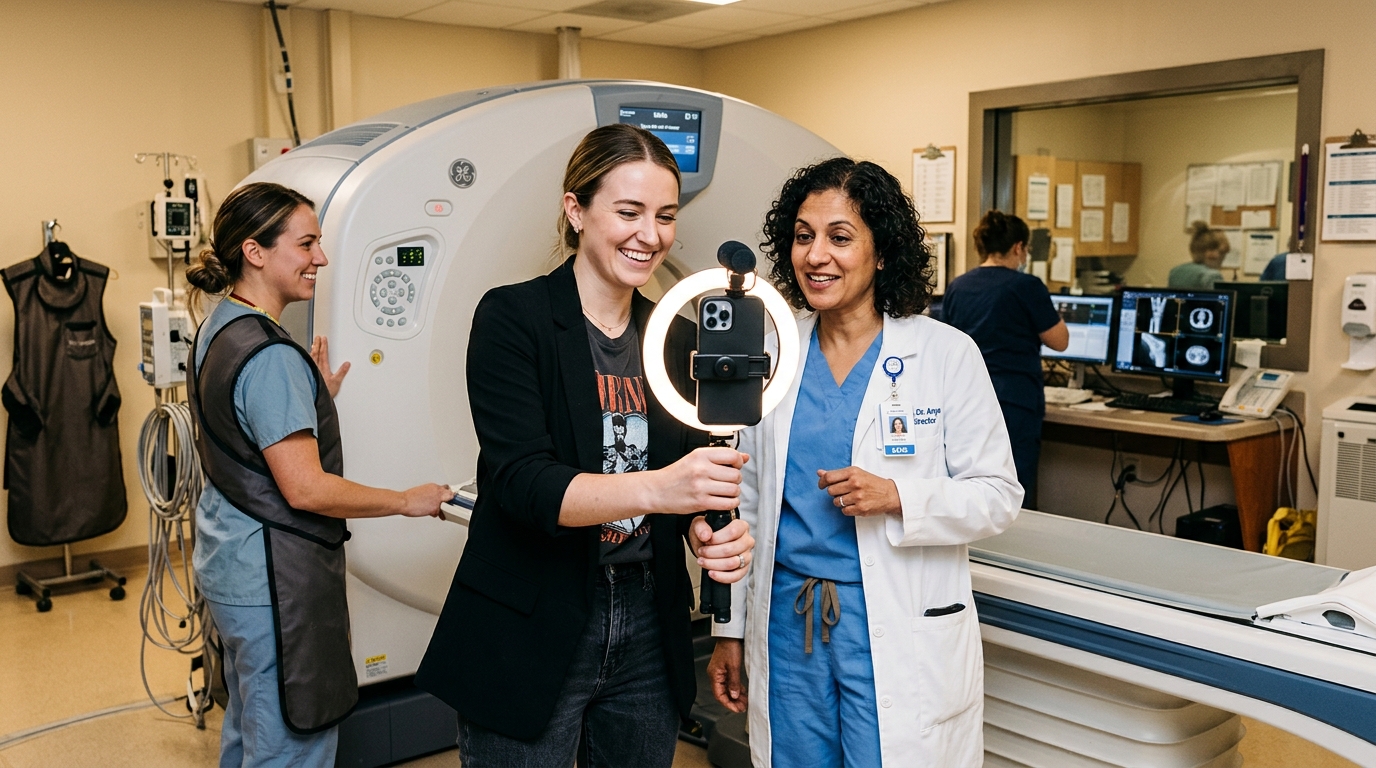
I've scrolled through about 400 hospital social media posts as a travel tech over the past seven years, and I can tell you with absolute certainty: most of them are terrible at recruiting rad techs.
Here's what usually happens. HR department posts a job opening on their LinkedIn. It looks like this:
"Join our dynamic team of healthcare professionals! We're seeking a radiologic technologist for our state-of-the-art imaging center. Competitive salary, excellent benefits, and growth opportunities. Apply now!"
And then they're genuinely confused why they're not getting quality applicants. They'll post it across three platforms, refresh it every month, get increasingly desperate, and eventually hire someone underqualified just to fill the slot.
Meanwhile, I'm watching travel companies recruit actual talent by posting videos of staff celebrating after a hard shift, stories about techs who advanced from PRN to full-time to educator, and real conversations about what work is actually like. And those facilities have zero problem filling openings.
I spent two years as a travel tech specifically because I was bored at my staff position. During that time, I got recruited successfully twice—not because of job postings, but because of social media. One hospital's Instagram showed genuine imaging team culture. Another had a department educator who was active on LinkedIn sharing quick clinical tips and tagging real employees. Both times, I watched that content over months before even considering applying, and when they posted openings, I knew exactly what I was getting into.
This is not complicated. It just requires a different approach than your corporate HR template.
What Actually Stops Techs From Scrolling Past Your Post
Rad techs are on social media. They're on LinkedIn, Instagram, Facebook, sometimes TikTok. But they're not there looking for jobs—they're there for community, information, and connection to people doing the work they do.
When they see a stiff corporate job posting, they scroll past in 1.3 seconds. When they see real people doing real work, talking about actual experiences, they stop. They watch. They think about it.
Here's the difference between what fails and what works:
Fails: "We offer a supportive work environment with great team dynamics!"
Works: A photo of three techs laughing in the break room with a caption: "When you've got a great shift crew, work doesn't feel like work. Meet Sarah, Marcus, and Jen—they're hiring now."
The second one is actual evidence of culture. It's specific. It's real people. It doesn't make a promise—it shows proof.
I worked at a facility that lost three experienced techs in six months. Then they started posting genuine content—a video of the chief tech explaining the new 3T installation, an employee story about someone who'd come to them as a PRN and was now the night shift lead, before-and-after photos of the renovated break room. Within four months, they'd filled two open positions with people who'd been watching their content for weeks and knew exactly what they were getting.
That's not luck. That's strategy.
Platform-Specific Approaches That Actually Work
Not all social platforms are created equal for tech recruitment. Here's what works where:
LinkedIn: This is where experienced techs hang out, where people are literally thinking about career moves. But they're thinking about professional growth, not just jobs. Post about learning opportunities. Share stories from staff who've gotten new certifications. Tag the educator who's investing in development. When you post a job, lead with the clinical opportunity, not the salary. "We're looking for a CT tech for a trauma center running 150+ exams per day where you'll develop advanced skills" lands better than "Competitive salary, excellent benefits."
Also—and this is critical—have real people posting. Not just your HR department. Have your imaging director post occasionally. Have a staff educator share a clinical pearl. Have techs talk about their career progression. People follow people, not departments.
Instagram: Visual platform. Use it that way. Before-and-after renovation photos. Day-in-the-life stories from different modalities. Behind-the-scenes of equipment installation. Tag your team. Show the physical environment. Rad techs want to know what the space feels like, not just what the scanner is. I followed a hospital's Instagram for three months purely because their imaging suite looked clean, modern, and well-organized. That might sound shallow, but when you're evaluating jobs, environment is information.
Facebook: This is where the community actually hangs out. Post job openings here, but more importantly, post culture content. Celebrate wins. Share staff spotlights. Post about community service your team does. Older techs, experienced techs, they're on Facebook. Don't skip this platform thinking it's dead.
TikTok: This is newer territory for hospital recruitment, but I've watched it work. Short, authentic videos of techs working, team moments, even humor about the job. A hospital that posts a 15-second video of a tech troubleshooting a scanner with dramatic music gets more engagement than a perfectly produced corporate video. Younger techs especially are on TikTok. If you can embrace authenticity and humor, this is powerful.
Employee Advocacy: Your Secret Weapon
Here's the thing nobody tells you: your employees are your best recruiters. And most facilities aren't leveraging this at all.
At my current facility, I'm encouraged to share culture content. When I post a photo from shift with colleagues tagged, when I share something I learned in a continuing education course, when I mention in a post that we're hiring—that reaches actual networks. My connections are other techs. People trust other techs more than they trust hospital marketing.
Facilities that win at social recruitment have systems for this. They might give staff a small monthly allowance for CME-related LinkedIn posts and tag the facility. They feature employee spotlights and ask them to share it. They empower their educators to post clinical content regularly. They don't control the narrative—they enable their people to tell their own stories.
One facility I know started a "Rad Tech Spotlight" series where once a week they feature a staff member. Interview with them about their journey, their specialty, their goals. The featured tech shares it with their network. Over six months, they had 18 employees who'd each brought that content to hundreds of their personal contacts. Result? Double the qualified applicants compared to the previous year. And the applicants already knew the culture and team because they'd been exposed to authentic voices, not marketing copy.
This is so simple it's almost embarrassing that more places don't do it. You have 25 technologists on staff. If each one shares two posts per month to their networks, you're reaching thousands of potential candidates with authentic content.
The Trap of "Competitive Salary" and Why It Doesn't Work
Every job posting says "competitive salary." Every single one. Do you know what that tells a rad tech? Nothing. It tells them you're not transparent about compensation, which makes them assume it's not actually competitive.
The facilities that attract talent are the ones that put actual numbers in the posting. "Starting salary $62,000-68,000 based on experience" is scary because it's specific. But it also means candidates who aren't in that range don't waste time applying, and the ones who do know exactly what to expect.
Combine this with transparency about other things: shift differentials, overtime availability, whether you're union or non-union, how education is supported. Rad techs are information-hungry. We want to know what we're actually signing up for. Being specific makes you look professional and confident. Being vague makes you look like you're hiding something.
I also see successful postings that mention things most don't: tuition reimbursement caps, CME allowance, rotation schedules, overtime expectations. One posting I saw didn't mention salary but did say "Tuition reimbursement up to $5,000/year for relevant certifications" right at the top. That detail made the position attractive to techs early in their careers.
The Cringe Factor: How Not to Sound Corporate
This is where most hospital social efforts fail. They sound like marketing. They sound inauthentic. They sound corporate.
Here's the rule: would someone on your actual staff say this out loud?
"We foster a culture of excellence and innovation in our dynamic imaging department."
No. No they wouldn't. They'd say something like: "We're a small team that figures things out together, and leadership actually listens when you have ideas."
The difference is massive.
Cringe happens when:
- You use industry buzzwords instead of plain language
- You make promises about culture without evidence
- You post perfectly composed stock photos instead of real moments
- You ask your social team to write copy that doesn't sound human
- You overuse exclamation marks and superlatives
- You talk at people instead of to them
Non-cringe happens when:
- Real employees write or help write the content
- You post imperfect photos that show reality
- You talk about actual specifics—not generic benefits
- You acknowledge challenges (yes, staffing is tight; yes, 12-hour shifts are demanding)
- You showcase real people with real accomplishments
- You engage with comments like a human, not a brand
I watched a facility's post about joining their team get 200+ comments because they didn't post a job opening—they asked "What made you choose to work in rad tech?" and let staff answer honestly. Then when they posted the opening two weeks later, it got massive engagement because people had already been in conversation with the team.
Frequency and Consistency: Show Up Regularly
This is boring but critical. Facilities that are good at social recruitment post consistently. Not obsessively—maybe 3-4 times per week across all platforms. But regularly enough that they're visible in people's feeds. Not so much that they're annoying.
One post per month isn't going to build awareness. Twenty posts per day is going to make people mute your account. The sweet spot is regular visibility.
And it's not just job postings. It's culture content. It's clinical content. It's celebrating wins. It's spotlighting people. When you post consistently over time, you build an audience that actually cares about your facility. Then when you post a job opening, you've got people watching who already know what it's like to work there.
The Direct Ask That Works
Once you've built this community and shared authentic content, the job posting itself is almost secondary.
The best opening posts I've seen don't say "Help us grow our team." They say something like: "We're hiring an experienced CT tech for our trauma center. If you're someone who thrives in fast-paced cases and wants to mentor others, this is for you. DM for details or tag someone who'd be great."
Then they activate the network. They ask employees to share it. They encourage people to tag qualified colleagues. They make it easy to pass along because it's framed as a genuine opportunity, not a corporate need.
This isn't revolutionary. This is just treating social recruitment like you're actually trying to connect real people with real opportunities instead of pushing a job posting through a marketing funnel.
You want to recruit good rad techs? Stop posting like a corporation. Start posting like a team that's proud of where they work and genuinely wants more good people to join them.
That authenticity is everything.
Related Articles

Burned Out as a Rad Tech? Here's How to Reignite Your Career
April 23, 2026

Managing Up: How Rad Techs Can Influence Department Decisions
April 22, 2026

How to Compete With Travel Agency Pay Without Breaking Your Budget
April 22, 2026
Quality Assurance in Radiology: Why QA Culture Affects Retention
April 21, 2026