The Director's Guide to Radiology Department Accreditation
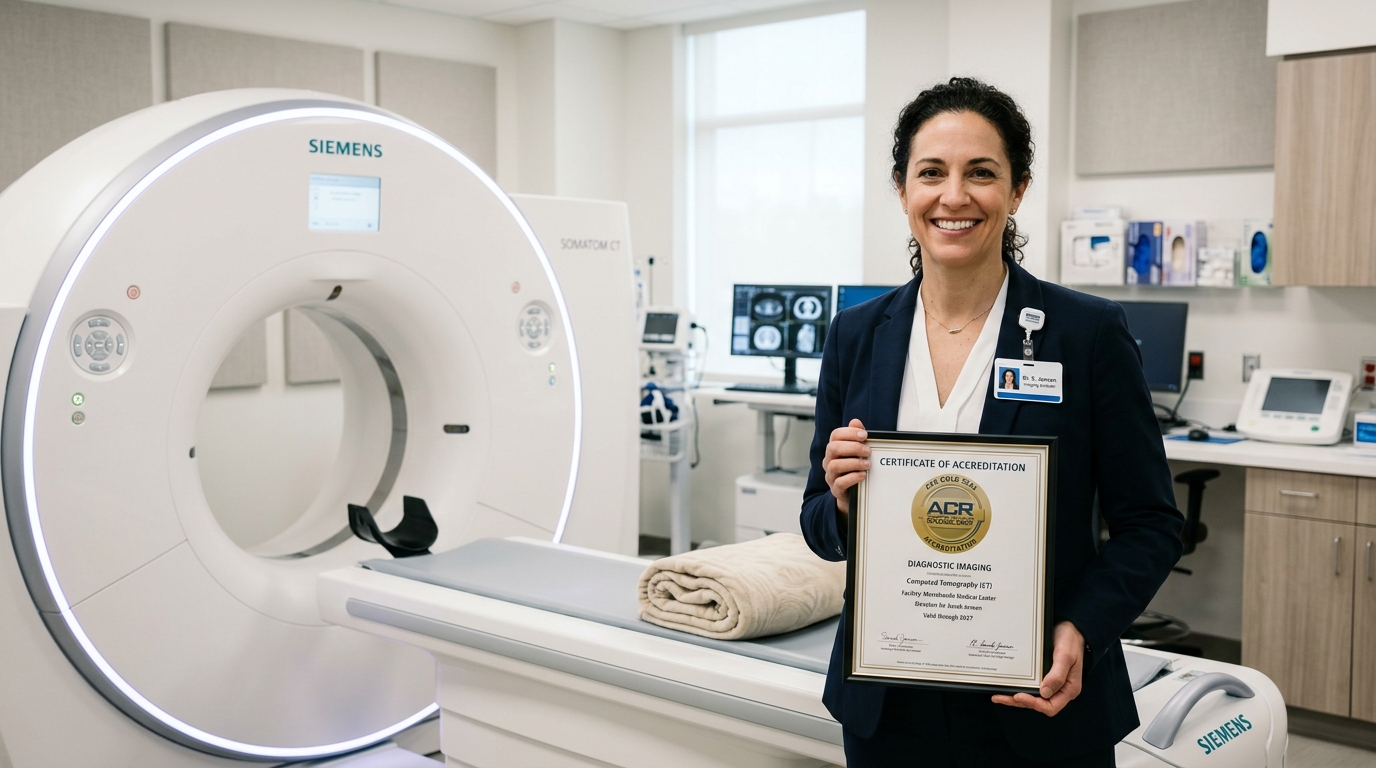
I was standing in my imaging department—charts everywhere, equipment needing service, staffing gaps—when my director casually mentioned Joint Commission would be arriving in four months. That sentence might have been the worst thing I heard all year.
I was new enough in the role not to have been through accreditation. I was experienced enough to know it would be complicated. And I was unprepared for what actually constituted the requirements. The immediate panic was real.
Twelve years later, I've been through six accreditation surveys—ACR, Joint Commission, and state inspections. I've done it right and I've done it with days to spare before surveyors showed up. I've learned what matters, what doesn't, and what actually trips departments up.
Here's what you need to know if you're facing this.
What You're Actually Being Surveyed On
Let me start with a clarity moment: radiology accreditation involves multiple overlapping systems, and most departments don't fully understand what each one requires.
The Joint Commission: They're looking at your entire hospital system, but for imaging, they care about patient safety, credentialing, informed consent, equipment maintenance, and whether your processes prevent errors. They're asking: Is your department safe? Do your techs know what they're doing? Do you have systems to prevent mistakes? Their survey focuses on accidental harm prevention, not on technical image quality.
The American College of Radiology (ACR): If you're pursuing ACR accreditation (particularly for CT, mammography, or chest X-ray), they're more technical. They care about image quality, phantom testing, dosimetry, and protocol compliance. They're asking: Is the equipment calibrated? Are you producing diagnostic quality images? Do you have documentation that you're monitoring quality?
State/Local inspections: These vary by location but often focus on licensure of equipment, radiation safety, and basic standards of care.
Here's the important part: Joint Commission is almost always required. ACR is often pursued voluntarily—because it's good for reputation, helps with reimbursement, and genuinely improves quality. State inspections vary in intensity.
Most departments are juggling all three simultaneously.
The Documentation Nightmare That's Actually Avoidable
When I first went through accreditation, I spent three weeks pulling credentialing files, imaging protocols, equipment maintenance records, and training documentation. We were prepared, but barely. It was stressful because we'd been catching things rather than building systems.
Here's what you actually need to have ready:
Current credentialing files for every tech: Birth date, license number, ARRT certification, CPR certification, hospital credentials, and any specialty credentials (contrast injection, fluoroscopy specialization, etc.). These need to be organized in individual files. Not in five different systems. In actual files.
Joint Commission surveyors will literally pull your tech list and spot-check five random files. If they open your credentialing file and the information is scattered or out of date, that's a citation. One of my early surveys found that three techs' CPR certifications had lapsed. The survey report highlighted it. That's the kind of thing that's easily preventable but glaringly obvious when someone's looking.
Detailed imaging protocols: Every imaging protocol you perform—every CT protocol, fluoroscopic procedure, X-ray technique—needs to be documented. Not just "chest X-ray." But specifically: patient preparation, positioning, imaging parameters, radiologist involvement, special considerations. These protocols need to be reviewed regularly and updated when procedures change.
I learned this the hard way. During one survey, a radiologist mentioned they'd changed how they ordered a particular CT protocol three months earlier. Our documented protocol hadn't been updated. Small issue, but it created a finding. Now I have quarterly protocol review meetings with radiology where we ask: Have we changed anything? Document it.
Training documentation: Every tech needs documented evidence that they've completed required training. Hospital safety orientation. HIPAA training. Radiation safety. Equipment-specific training for specialty modalities. CPR. Any specialty credentialing training. This needs to be documented and current.
Equipment maintenance records: Service logs, calibration records, phantom testing (for ACR-accredited modalities), any repairs or modifications. These need to be organized and accessible. Surveyors will ask: When was this CT last calibrated? When was the mammography phantom test? They want to see documentation you're maintaining the equipment properly.
Quality assurance programs: You need evidence you're monitoring image quality, patient dose, equipment performance, and outcomes. This sounds complex but it's simpler than it sounds: you need documented QA procedures and evidence you're actually doing them.
What Surveyors Actually Look For (Beyond the Obvious)
This is where most departments lose credibility. They get the big things right but miss the small things that suggest poor systems.
Cleanliness and organization: This sounds superficial but it matters. Surveyors look at whether your equipment is clean, whether your control room is organized, whether your staff area looks professional. A cluttered, disorganized department suggests disorganized processes. I learned to do a walk-through the day before a survey thinking like a surveyor: if I'm looking for evidence of poor safety culture, what would I see? Clean it up.
Staff knowledge: A surveyor might ask a random tech about a protocol. Can they explain what they're doing and why? Or do they just follow a checklist? Techs who understand their work and can articulate quality concerns suggest a professional culture. Techs who shrug and say "the computer tells me what to do" suggest the opposite. I now do mock surveyor interviews with staff beforehand. It's surprisingly revealing.
Incident documentation: If something goes wrong—a patient injury, a near-miss, a complaint—it needs to be documented. Surveyors look for evidence you report and respond to problems. One of my departments was weak here. We had problems but we weren't formally documenting them. The survey noted poor incident reporting culture. That required a systematic overhaul.
Radiologist collaboration: Surveyors will ask if the tech and radiologist communicate effectively. If there's friction or misalignment, they notice. I've seen surveys where the radiologist and tech had clearly never discussed how certain procedures should work. That creates a finding. Now we have formal communication protocols and regular meetings.
Adherence to protocols: Surveyors will compare what you've documented against what they observe. If your protocol says you position patients for a specific procedure a certain way, but staff are doing it differently, that's a discrepancy. Protocol compliance is crucial.
Timeline and Logistics: What Actually Happens During a Survey
A typical Joint Commission survey takes 2-3 days for a hospital our size. The opening meeting happens on day one. They'll spend day one and two walking your department, reviewing records, interviewing staff, and observing processes. The closing meeting on day three is where they present preliminary findings.
Here's what I recommend for preparation:
Ninety days before: Start pulling credentialing files. Identify any gaps. Do CPR certifications need renewal? Are licenses current? Get ahead of this.
Sixty days before: Conduct a mock survey with a trusted consultant or senior staff member. Walk through your department as if you're a surveyor. What stands out? What's missing? Fix obvious problems.
Thirty days before: Final documentation sweep. Verify all training records are current. Make sure protocols are documented and up to date. Organize all records in a way you can quickly access them.
Two weeks before: Staff meeting to prepare. Not a panic meeting. A professional meeting. Explain what surveyors are looking for. Talk about staying calm, answering honestly, being professional. Have staff practice talking about their work.
One week before: Final walkthrough. Is the department clean? Is equipment organized? Are records accessible? Do a detailed check of your credentialing files.
Day of: Answer honestly. Don't over-explain or try to hide problems. If a surveyor asks a question, answer it directly.
Common Citations and How to Prevent Them
In my experience, certain findings show up repeatedly across departments:
Outdated or incomplete credentialing: This is the most common citation. Someone's CPR lapsed. A license isn't documented. A specialty credential isn't in the file. This is entirely preventable with basic systems.
Lack of protocol documentation: Surveyors ask for a specific protocol and you can't find it or it's not detailed. Fix: have all protocols documented in a single accessible system, reviewed regularly.
Incident reporting deficiencies: A problem happened and nobody reported it formally. Fix: create a culture where incidents are reported immediately, not hidden.
Equipment maintenance gaps: No record of recent calibration or service. Fix: create a maintenance schedule and stick to it religiously.
Staff knowledge gaps: A tech can't explain a procedure or safety protocol clearly. Fix: invest in training and regularly ensure staff understand not just how to do something, but why it matters.
Infection control issues: Broken hand washing stations, improper equipment cleaning, unclear procedures around sterile technique. Fix: audit your infection control processes regularly.
Consent documentation: No evidence of informed consent or patient identification issues. Fix: have clear processes and document compliance.
The Real Work: Building Systems, Not Just Getting Through the Survey
Here's my biggest learning: the departments that do well in surveys are the ones that treat accreditation as foundational, not as a crisis event.
I work differently now. We have:
- A credentialing coordinator who manages files year-round
- Quarterly protocol reviews with radiology
- Monthly equipment maintenance logs reviewed
- Regular incident reporting review
- Quarterly staff training on safety topics
- Annual mock surveys
This isn't extra work. It's work done systematically instead of frantically. When a surveyor shows up, they see a department that does these things naturally.
The alternative is what I experienced early in my career: treating accreditation as a four-month panic event, getting through the survey, then forgetting about documentation until the next survey is announced.
The Mental Component
One last thing: accreditation surveys create anxiety. You're being evaluated. There's pressure. Your director is watching. It matters for your department's reputation and reimbursement.
I learned to reframe this: surveyors aren't trying to catch you. They're trying to ensure patient safety and quality. If you've built systems to maintain safety and quality, the survey becomes evidence of that, not a test you're trying to pass.
The departments that approach surveys this way pass with fewer findings. The ones that treat it as a threat and scramble at the last minute typically have more problems identified.
Your job as a director is to build systems that maintain safety and quality all the time. The survey is just documentation of whether you've done that.
If you've prepared well, you're not nervous. You're proud. And that confidence shows.
Related Articles

Burned Out as a Rad Tech? Here's How to Reignite Your Career
April 23, 2026

Managing Up: How Rad Techs Can Influence Department Decisions
April 22, 2026

How to Compete With Travel Agency Pay Without Breaking Your Budget
April 22, 2026
Quality Assurance in Radiology: Why QA Culture Affects Retention
April 21, 2026