The Manager's Guide to Handling Rad Tech Call-Off Culture
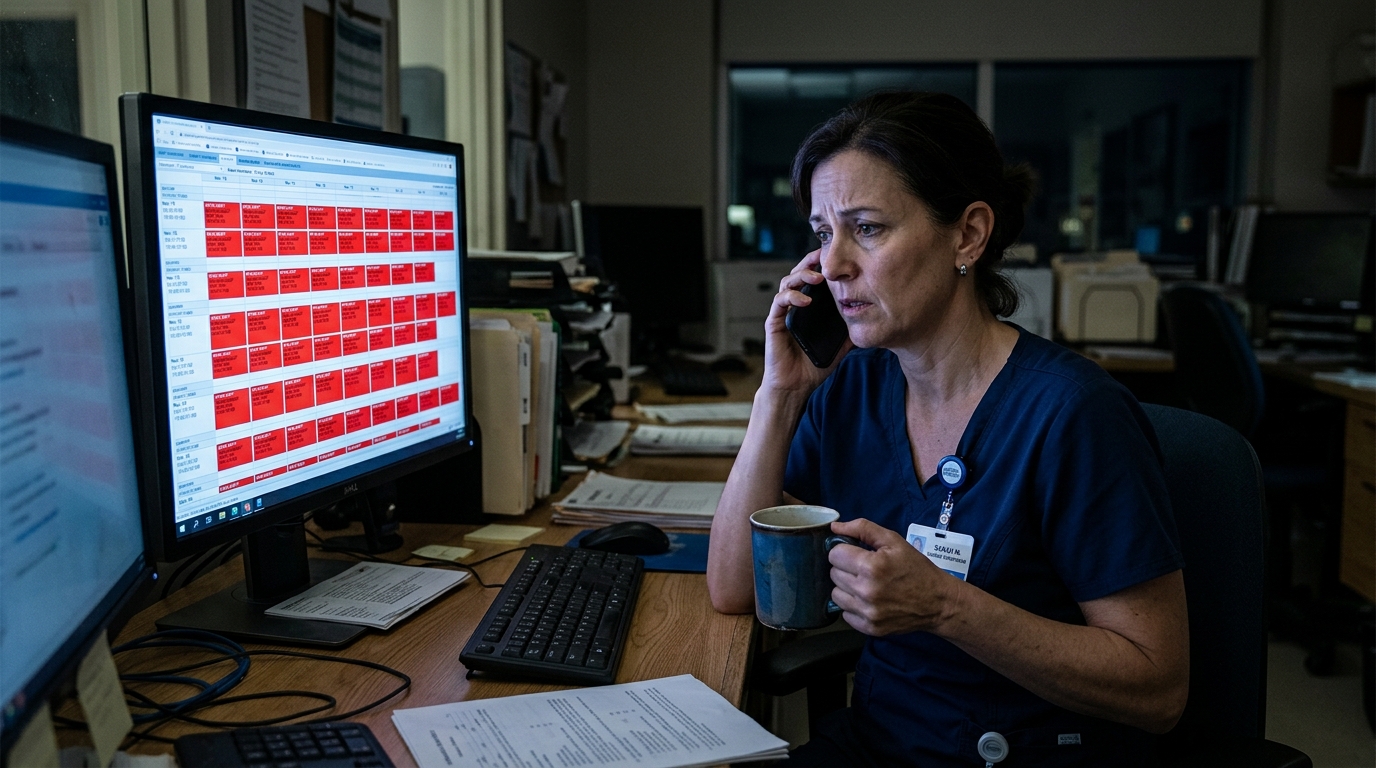
When I first took over the imaging department at St. Catherine's back in 2003, I inherited a mess. Not the typical "needs new equipment" kind of mess. I'm talking about a call-off rate that hit 18% on bad weeks. The schedule would open up on my phone at 6 a.m. to what felt like a game of Whac-A-Mole—three MRI techs called out, one CT tech sick, and two backup names who I knew wouldn't pick up before 7:15. By 8 a.m., I'd be canceling procedures and watching patients get bumped to the following month.
I get it. Radiology techs are human beings. Life happens. But I also had an angry cardiologist yelling in my office, a referring physician considering sending their cases elsewhere, and three solid techs doing the work of five people with absolutely no end in sight. Something had to change.
It took me about three years—and more mistakes than I'd like to admit—to figure out what actually works. I'm going to be honest with you: there's no magic bullet. But there are principles that can genuinely move the needle, and they don't require you to be a tyrant.
The "Why" Behind Call-Offs Is Never What You Think
Here's what I learned the hard way: you can't solve a problem you don't understand. My instinct was to assume our techs were just checked out. They weren't. What I discovered through actual conversations—not exit interviews, but real one-on-ones—was way more nuanced.
Some of our call-offs were legitimate. We had two techs with chronic pain conditions. One had an unreliable ex with custody issues. Another had transportation problems that actually made punctuality a nightmare. But some of the call-offs? Those came from burnout. Genuine, soul-crushing burnout.
I'd been scheduling eight consecutive 10-hour shifts. I wasn't asking permission; I was just assigning it. The techs weren't lazy. They were exhausted, and "calling off" was their only tool to push back against schedules that were unsustainable. When you're desperate, you call out. When you're resentful, you call out. When you literally don't have childcare coverage because your shift changed without notice, you call out.
The epiphany hit me while talking to Sarah, one of my best MRI techs. She said, "I like working here. I don't like what working here is doing to my life." That landed differently than anything any HR consultant had told me.
Separate the Legitimate from the Pattern
Not all call-offs are created equal. The first real move I made was implementing a transparent tracking system—nothing punitive at first, just data.
I color-coded: green for legitimate emergencies (documented illness, family emergency, etc.), yellow for the gray area (I didn't feel well, childcare fell through), and red for repeated last-minute patterns. I shared the categories with the team, no surprises. I wasn't trying to catch anyone; I was trying to see patterns.
What emerged was clarifying. About 65% of our call-offs were green. That's legitimate, and those don't require policy changes; they require compassion and backup staffing. About 25% were yellow—the edge cases where life genuinely got messy. And 10% were red: one tech who called out almost every Friday, another who'd call in sick on days when the schedule was particularly demanding.
Here's where it got interesting: the red cases weren't actually our most senior, most entitled people. One was a solid mid-level tech with anxiety. She'd panic on heavy days and just couldn't get herself to come in. The other had substance issues that he was dealing with privately. Neither of them was calling off because they didn't care.
This matters because it changes your approach. A tech with anxiety needs accommodation and maybe a conversation about fitting into a rhythm. A tech struggling with addiction needs a different kind of help. A tech commuting 45 minutes in bad traffic with two kids and no backup plan needs scheduling flexibility. You can't use the same playbook for all three.
The Accountability Piece (Without Being a Jerk About It)
Let me be clear: accountability is essential. But how you implement it determines whether you're solving the problem or creating a more toxic environment.
I established clear expectations. We had three documented call-offs per 12-month period before we'd have a formal conversation. Anything beyond that, we sat down. No surprises. It was written in our departmental handbook and posted on the break room board.
But here's the part that mattered: exceptions were allowed if you brought solutions to the table. One of my senior techs, Marcus, was hitting that three-call-off threshold by month eight. He came to me before I'd even drafted the conversation. He said he was having "life stuff" and asked if he could adjust to part-time for a quarter. We made it work. He eventually transitioned back to full-time, and he stayed with us for another seven years. Had I just enforced the rule rigidly, I'd have lost someone invaluable.
The other tech—the one with the anxiety and the Friday call-off pattern—that required a different conversation. I referred him to our EAP, asked if we could modify his schedule, and set real expectations. When he called off again the following Friday without using our accommodation options, we had to escalate. But he knew exactly what the expectation was. It wasn't hidden.
Staffing for Reality, Not Theory
Here's something nobody wants to hear: if your baseline staffing assumes perfect attendance, you're already failing.
Look at your numbers. I did. Our "optimal" schedule had us covered at 100% if everyone showed up. In reality, we averaged 6-8% call-offs per month. That's not an outlier; that's epidemiology. Any manager in any healthcare setting will tell you: plan for attrition.
I advocated hard for hiring additional PRN staff—per diem rad techs who could flex in. It was an uphill battle with finance. "But you don't have the money!" they'd say. I responded with the math: one 30-day delay in scheduling bumps the radiology backlog, which triggers compliance issues, which triggers penalties, which costs way more than a PRN salary. Eventually, they listened.
We went from having zero backup to having two solid PRN techs who could cover shifts. That single change dropped our cancellation rate by 40%. It also took the pressure off our full-time staff knowing that calling off for a genuine emergency wasn't going to destroy the department.
Culture Eats Policy for Breakfast
You can have the most thoughtfully written call-off policy in the world, and it won't matter if your culture is toxic. Conversely, in a culture where people genuinely want to be there, call-offs naturally go down.
I started asking different questions in huddles: "What would make this job better for you?" "What's one thing I can change that would improve your week?" Not in an exit-interview way, but in a regular, ongoing way. I actually listened and changed things accordingly.
One example: I moved the start time for our early shifts from 5:30 a.m. to 6 a.m. Seemed minor. But our commute analysis showed that 40% of our team was leaving their houses before sunrise in darkness, which fueled anxiety and made sleep worse. The shift of 30 minutes changed the entire dynamic for some people.
I also implemented a "no schedule changes within 72 hours" rule unless we explicitly asked the tech if they were available. It sounds simple, but it reduced the stress-induced call-offs significantly. When people feel respected and predictable, they show up.
The Bottom Line
Call-off culture doesn't happen because your techs are bad people. It happens because there's a gap between what the job demands and what the department can deliver without burning people out. Your job as a manager is to close that gap.
It took me years to stop seeing call-offs as personal betrayals and start seeing them as data about systemic problems. When I made that shift, everything got better. We went from 18% call-offs to an average of 6%, which is actually normal for the industry. Our turnover dropped. Our patient satisfaction improved. And honestly, the job got less stressful for me.
You're not going to eliminate call-offs. You're human, your staff is human, and life happens. But you can build a department where people want to show up, where accommodations are available for real obstacles, and where staffing is realistic enough to absorb the inevitable absences without imploding.
Start by having actual conversations with your team. Stop assuming. Get the data. Separate patterns from exceptions. Hire backup. And build a culture where people feel valued. That's where the real change happens.
Related Articles

Burned Out as a Rad Tech? Here's How to Reignite Your Career
April 23, 2026

Managing Up: How Rad Techs Can Influence Department Decisions
April 22, 2026

How to Compete With Travel Agency Pay Without Breaking Your Budget
April 22, 2026
Quality Assurance in Radiology: Why QA Culture Affects Retention
April 21, 2026