Second Career as a Rad Tech: Why It Might Be the Best Decision
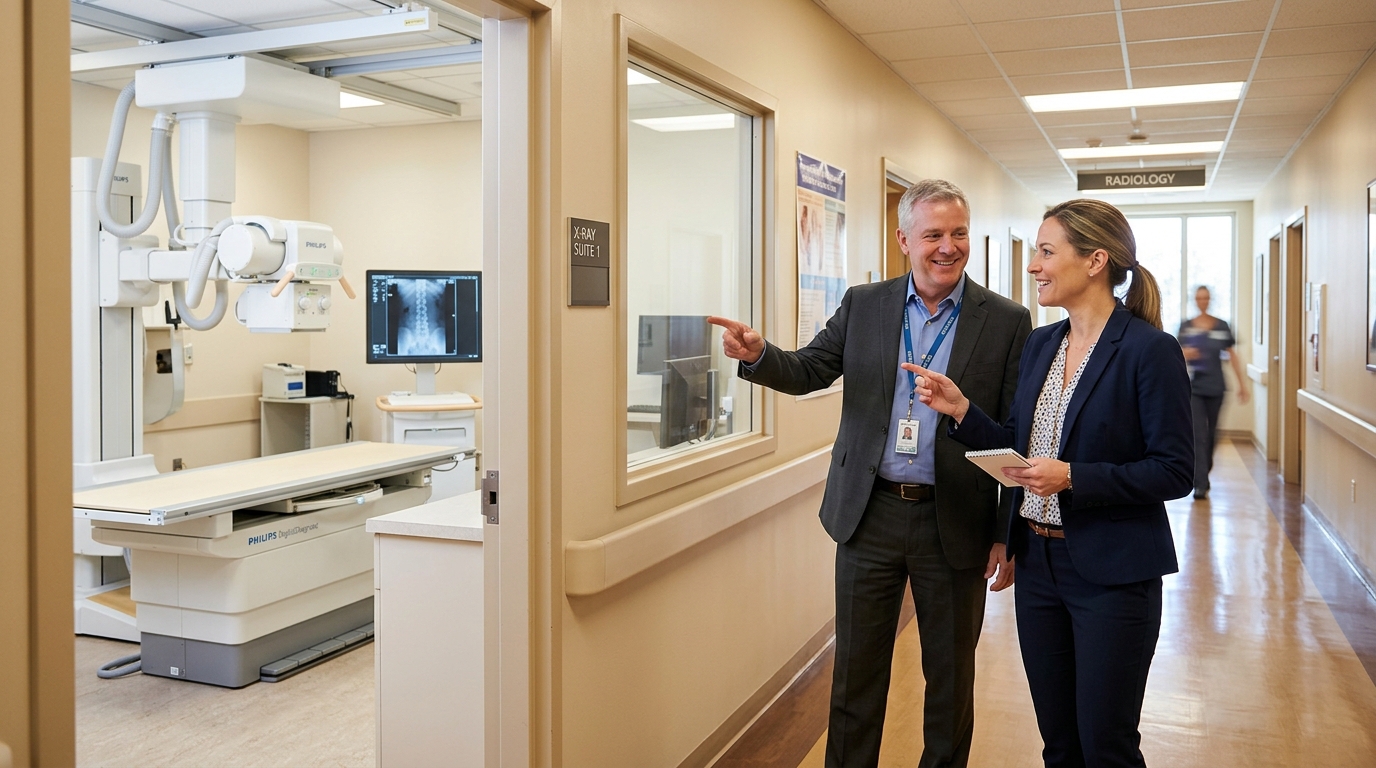
I was training a new tech in her early 50s—she'd left corporate HR after 28 years—and watching her learn positioning for a routine chest X-ray. She was methodical, asked precise questions about patient comfort, anticipated what the radiologist would need, and treated the whole process like it mattered. Which it does.
Her name was Linda, and she was probably the best trainee I worked with that month. And she'd been in school with people half her age who were brilliant but hadn't yet understood that what you do actually affects people.
That's the secret about second-career rad techs that doesn't make it into the recruitment materials: life experience isn't a liability. It's an advantage. I've spent eight years as a traveling tech and three years training people, and I've watched second-career professionals consistently become excellent clinicians. Better, sometimes, than the career trackers.
Here's what I've learned, and what you should know if you're considering this path.
The Second-Career Profile That Thrives in Radiology
Let me start by being honest about who actually succeeds here, because not everyone does.
The second-career techs I've seen excel share some consistent traits. They've already built their foundation in another field—so they're not trying to figure out basic professional skills. They know how to be reliable. They've learned how to interact with people. They understand that their actions have consequences. They're not arriving with unlimited optimism and naivety; they've got some calluses.
Linda came from HR. Before her change, I trained a former teacher (now an excellent CT specialist), a guy who'd left real estate, and a woman who'd been a surgical nurse for 12 years and wanted something less physically demanding. One common thread: they all understood that showing up and being competent matters. No one was treating this like a temporary placeholder or a social experience.
The successful second-career transition usually looks like this: someone's first career has given them professional maturity, possibly some healthcare familiarity (though not always), and most importantly, clarity about why they're making the change. They're not bouncing around. They've thought about it. They're committing.
The less successful transitions? They often involve someone trying to escape their first career without really understanding what rad tech work entails, or someone thinking it'll be easier than it actually is. "My friend's a rad tech and makes good money and only works three days a week" is not a sound career-change strategy. It's a recipe for burnout.
The Realistic Financial Picture
Let me give you the numbers, because this matters, and a lot of people get it wrong.
Becoming a rad tech requires either a 2-year associate degree or a 4-year bachelor's degree. Let's work with the 2-year timeline since that's more common.
Direct costs: Tuition varies wildly by region and program. Community college to public university programs run $10,000-25,000 for the two years. Private programs can be $40,000-60,000. Add books, prerequisites, exam fees, and you're probably looking at $15,000-35,000 total.
Opportunity cost: This is the number people don't always factor in. If you're leaving a job that paid $55,000/year to go to school full-time, you're not earning $110,000 over two years. That matters.
Entry salary reality: Starting wage for a new rad tech is roughly $38,000-45,000 in most markets, depending on location and facility. Yes, experienced techs make $55,000-75,000+. But you're not starting there.
Break-even timeline: If you're starting at $42,000 after leaving a job that paid $55,000, you need roughly 4-5 years to break even on the lost income plus the cost of education. After that, it's financially positive.
This sounds grim, but here's the reality check: if you'd been in your first career for 20+ years and you were making $60,000-70,000, and you can land a position at $45,000 as a new grad rad tech, your earning power rebounds. Within 5-7 years in radiology, you're probably back to making what you were before. And you'll work less weekends and have better job security.
The financial math works if:
- You've got some savings to absorb the income loss
- You're not trying to support yourself on a tech's new-grad salary immediately
- You understand this is a 5-7 year rebuild period
It's brutal if you have zero financial buffer and you're relying entirely on your new salary immediately.
Why Your Life Experience Actually Matters
This is the part I want to emphasize because it's genuinely true and doesn't get enough airtime.
Patient interaction: Linda spent 28 years managing people, many of them stressed or difficult. She brought that skillset directly to patient positioning. A nervous patient on a CT table? She knew how to calm them. She'd done it 10,000 times in different contexts.
Problem-solving: A former engineer I trained instantly understood CT physics in ways that took most people longer. A banker understood the billing and logistics side of radiology quickly. Everyone brings cognitive frameworks from their previous work.
Professionalism and reliability: I've watched people in their 20s struggle with basic reliability—calling in sick frequently, missing deadlines, not thinking ahead. The second-career folks I've trained almost universally understood that showing up and being competent is foundational. They'd been professional adults before.
Work-life perspective: Young techs sometimes burn out because they expect unlimited energy and haven't established boundaries. Second-career professionals usually know their limits better. Linda worked 32 hours a week and was strategic about her schedule. She lasted longer with better quality of life than the 22-year-old working 50 hours trying to impress everyone.
Patience with ambiguity: Medical training involves a lot of "you don't know what you don't know yet." Second-career folks are more comfortable with that. They've learned new things before. They know it takes time.
These aren't small things. They're the difference between someone who becomes a solid, reliable tech and someone who burns out in two years.
The Program Considerations for Older Students
Here's what you need to think about when choosing a program if you're making this transition:
Program flexibility matters. You probably need something that accommodates adult learners. Full-time, day-only programs are hard if you have family or financial obligations. Look for programs with evening options, online prerequisites, or part-time paths. Many community colleges have these; many four-year programs don't.
Prerequisites can be a slog. Most programs require chemistry, physics, and anatomy. If you haven't taken science in 15 years, you'll likely need refreshers. Budget time for this. Some programs offer bridge courses. Take advantage.
Clinical rotation scheduling: This is often inflexible. You'll be doing clinical rotations on hospital schedules, which might mean weekends and evenings. Make sure you can arrange your life for this 6-12 month period. It's temporary but intense.
Technology literacy: You'll be learning both radiological technique and digital systems. If you're someone who's avoided technology, this is going to stretch you. But radiology is increasingly digital, and the programs will teach you. Expect to be uncomfortable initially.
Financial support: Look for scholarships targeting career-changers or non-traditional students. Many schools have them. Look into whether your employer (if you're still employed during school) offers tuition reimbursement. Some states have workforce development grants. Do research.
Peer dynamics: You'll be in classes with people 20-30 years younger. Some students find this energizing; some find it exhausting. Think about which you are. I trained one woman who loved being around younger people and learned technology faster because of the peer pressure. Another found it isolating. Know yourself.
The Personality Traits That Actually Predict Success
Beyond life experience, certain personality traits matter:
Intellectual curiosity: Radiology isn't hard, but it requires actual thinking. You need to understand why you're positioning someone a certain way, not just memorize positions. If you're someone who asks "why," you'll thrive. If you want to be told exactly what to do and nothing more, you'll struggle.
Tolerance for physical work: This job involves patient transfer, standing for hours, occasional heavy lifting, and repetitive motion. Not everyone's body handles this. If you've got chronic back issues or arthritis, think carefully. If you're physically active, this is fine.
Emotional regulation: You'll see suffering. You'll work with difficult patients and challenging radiologists. You need to stay calm and professional. If you're prone to taking things personally or shutting down under stress, this is going to be hard.
Attention to detail: A half-inch of positioning error can ruin an image. You need to care about precision and quality. If you're naturally sloppy or don't pay attention to fine details, this isn't the right field.
Comfort with constant learning: Imaging technology changes. Protocols evolve. You need to keep learning throughout your career. If you've been out of school for 20 years and are done learning, radiology isn't for you.
What I Tell People Who Are Seriously Considering This
If you're sitting with this decision, here's what I say:
Do it for the right reasons. Not because you need to escape your current job. Do it because there's something about radiology that appeals to you. The money is okay, not amazing. The job security is good. But the real reason should be something about the work itself.
Understand the timeline. You're looking at 2+ years to complete the education, then 1-2 years to develop actual clinical competency. This isn't a quick fix.
Interview actual techs. Not just one. Talk to five or six techs in different settings. Ask about their day, what they like, what they struggle with. Make sure it sounds like a life you want to live.
Shadow a clinical day. Many programs include this, but if yours doesn't, volunteer. Spend a day in a radiology department watching people work. Is this environment something you want to be in?
Run the financial numbers for your life. Know what two years of school costs, what income loss looks like, what your entry salary will be. Make sure you can actually do this.
Make sure your family is on board. If you've got a partner or kids, they're affected by your schedule during school and your entry-level salary for 3-4 years. Make sure everyone's committed.
The Best Version of This Story
Linda finished her program 18 months ago. She's now working three days a week at a regional hospital, making $48,000 annually, and genuinely loves her job. She's not stressed about money because she'd built a nest egg in HR. She's energized by learning, respected by her colleagues for her professionalism, and has a career that will sustain her into her 70s if she wants it to.
That's possible for you too. But it requires honesty about your financial situation, realistic expectations about the timeline and the work, and genuine interest in the field—not just escape from your current situation.
Second-career radiology can be absolutely the right move. You just need to go in with your eyes open and a real plan.
Related Articles

Burned Out as a Rad Tech? Here's How to Reignite Your Career
April 23, 2026

Managing Up: How Rad Techs Can Influence Department Decisions
April 22, 2026

How to Compete With Travel Agency Pay Without Breaking Your Budget
April 22, 2026
Quality Assurance in Radiology: Why QA Culture Affects Retention
April 21, 2026