Workplace Violence in Radiology: A Growing Concern
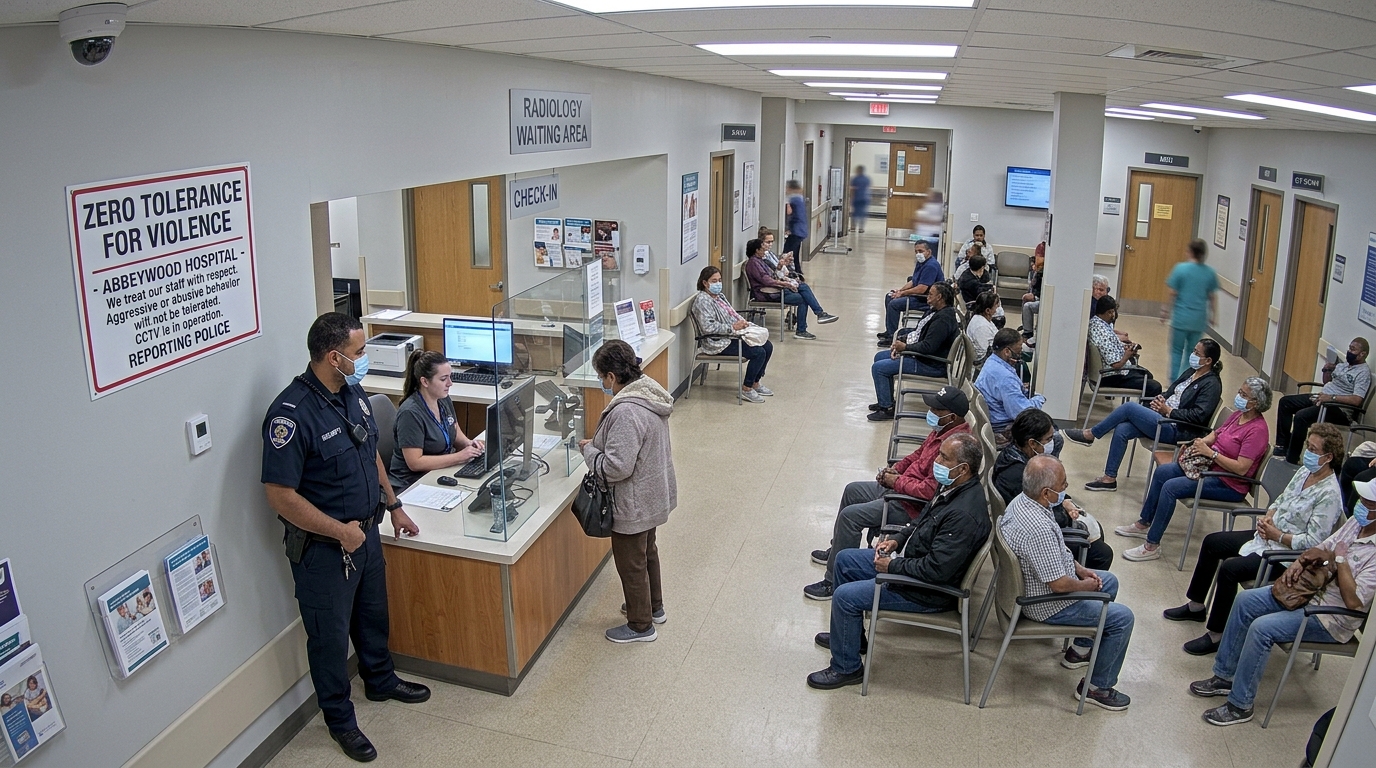
I was alone in the CT reading room—it was 9:47 PM on a Tuesday—when a man walked in without knocking. He wasn't a patient. He wasn't staff. He walked straight toward me, and the only reason nothing bad happened is because my colleague Katie happened to be walking by in the hallway.
I've been a radiology tech for fifteen years, and I can tell you that incident changed how I think about safety.
It's not that I didn't understand workplace violence was possible. I did. But there's a gap between intellectual understanding and the sudden spike of adrenaline when a stranger is approaching you in an isolated imaging area with no one else around.
Since that night, I've become obsessed with the data, the protocols, and the real conversations about violence prevention in radiology departments. Because here's what nobody talks about enough: radiology technologists are vulnerable in ways that other healthcare workers aren't always discussing openly.
The Stats: Workplace Violence in Healthcare Is Getting Worse
Let's start with the uncomfortable numbers:
According to OSHA and the CDC, healthcare workers experience violence at a rate about four times higher than workers in other industries. That was true before the pandemic. Since 2020, the rates have gotten worse.
The healthcare industry accounts for about 73% of all nonfatal workplace violence incidents reported to OSHA, despite healthcare workers making up only about 10-12% of the workforce.
Within healthcare, emergency departments get the most attention (and rightly so—they have the highest incident rates). But what's underreported is that radiology departments have significant incident rates too.
A 2024 survey of radiology technologists by a major imaging professional association found that:
- 34% of respondents had experienced at least one incident of verbal abuse or threats in the past twelve months
- 8% had experienced physical violence
- 42% felt their workplace did not have adequate safety protocols
- 67% reported feeling anxious about safety during certain shifts
Those numbers are real. And they're probably underestimated because many incidents go unreported.
Why Radiology Is Uniquely Vulnerable
Hospitals and imaging centers vary widely in their violence incidents, but radiology departments have specific vulnerabilities that other departments don't always face:
Isolated Work Areas
This is the big one. Unlike ED nurses who work in open bays with other staff nearby, radiology techs often work in isolated rooms. You're alone with a patient in the CT room. You're alone in the ultrasound suite. You're alone positioning someone for X-ray.
If something goes wrong, help isn't immediately available. The imaging tech's panic button or call bell might be far away or not accessible while you're actively scanning.
I remember a colleague, Tom, dealing with a confused patient who became aggressive during a CT scan. He was in the scanner room alone. He had to physically back out of the room, secure the door, and go find help. Ninety seconds, and he felt completely vulnerable.
Confused or Cognitively Impaired Patients
Radiology draws a lot of elderly patients, some with dementia. It also gets patients from the ER who are intoxicated, on drugs, or experiencing psychiatric crises. These patients aren't necessarily violent, but their behavior can be unpredictable.
A patient who doesn't understand where they are, why they're being positioned on a hard table, or why you're asking them to hold still—that's someone who might react physically without intent to harm. But intent doesn't matter much when you're the one being hit.
ER Overflow and Fast Turnaround
When EDs overflow—which is almost always—radiology imaging gets backed up with patients in acute distress or altered mental states. You're seeing sicker, more vulnerable, more unpredictable patients than usual. And you're being asked to move them faster.
Low Visibility to Management
In many facilities, radiology is geographically separated from administrative areas. Managers aren't walking through imaging rooms regularly. If there's a problem developing—a patient who's becoming agitated, staff feeling unsafe—management might not know until an incident actually occurs.
My Personal Experience: What I Learned
That incident I mentioned—the man in the reading room—happened because of several failure points:
First, our facility had inadequate door locks and no way to secure imaging areas from the inside. The reading room door had a standard push lock that could be opened from outside with a key.
Second, there was no requirement for staff to confirm patient identification or reason for being in back areas. Anyone could theoretically wander back.
Third, I was alone. Our facility had minimized staffing to save costs, and it was common for evening shifts to have one tech covering multiple imaging areas simultaneously.
After that incident, I pushed hard for changes. Not because I'm a hero—because I was scared and I didn't want my colleagues to experience the same fear.
We implemented:
- Locked doors with interior panic buttons
- A check-in system for people moving between public and clinical areas
- Minimum two-person coverage after 7 PM
- Basic de-escalation training for all tech staff
- Clear protocols for reporting and documenting incidents
- Regular safety audits
Did it cost money? Absolutely. Did some people resist? Yes. But the environment felt safer immediately.
What Actually Works: Prevention and Response Protocols
I've researched this extensively, talked to security professionals, and looked at what facilities with low violence incident rates are doing differently. Here's what actually works:
Environmental Design Matters
Facilities with better safety records invest in:
- Rooms that tech staff can lock from inside
- Visible panic buttons or alert systems
- Clear sightlines—no hidden corners in imaging areas
- Good lighting in all areas (not just clinical areas)
- Limited access to clinical areas with visitor check-in systems
- Staff areas that are physically separated from patient areas when possible
I worked with another system that was having repeated issues. They spent $80K on environmental upgrades: rekeying door locks, installing panic buttons, improving lighting, creating clear entry/exit flows. Incidents dropped 60% in the first year.
De-escalation Training Is Essential
You can't eliminate violence risk, but you can reduce it by recognizing early warning signs and responding appropriately.
De-escalation training teaches you to:
- Recognize agitation or confusion early
- Maintain distance and non-threatening posture
- Use calm voice and simple language
- Validate the person's feelings even if their behavior is inappropriate
- Know when to step away and get help
Most radiology techs receive zero de-escalation training. That's a gap. Good facilities require it annually.
Clear Reporting and Documentation
Here's what I've observed: when facilities don't have clear reporting protocols, incidents don't get documented. When incidents don't get documented, patterns don't emerge. When patterns don't emerge, nothing changes.
Facilities with strong safety records have:
- Easy reporting mechanisms (not requiring extensive paperwork)
- No retaliation for reporting
- Regular review of incidents to identify patterns
- Support for affected employees (counseling, time off if needed)
- Communication back to staff about what happened and what changed
Adequate Staffing
This isn't glamorous, but it's real: techs working alone or with minimal backup are more vulnerable. Facilities committed to safety budget for adequate staffing.
It doesn't mean everyone pairs up all the time, but during high-risk periods (evenings, nights, ED overflow days), there should be enough staff that no one is completely isolated.
Security Presence
Some facilities have dedicated security. Others have security trained staff. What matters is that there's a visible presence and a protocol for rapid response if an incident occurs.
What Techs Can Do Personally
Beyond what your employer should be doing, here's what I do to protect myself:
Be aware of your surroundings. Notice who's coming into imaging areas. Confirm patient identities. If something feels off, trust that instinct. Don't discount your gut.
Know your facility's protocols. What's the call system? Where are panic buttons? How do you call for security? Don't wait until you need help to figure this out.
Never stay alone if you feel unsafe. If you're uncomfortable with a patient or a situation, get a colleague or your manager. That's not being difficult—that's being safe.
Document everything. If you have an incident or even a near-miss, document it completely and report it through official channels.
Support colleagues. If someone else has a scary experience, take them seriously. Don't minimize it. Recognize that different people have different tolerance levels for risk.
Advocate for safety improvements. Talk to your manager, your union rep, your department leadership. Safety should be a non-negotiable conversation.
What Managers and Facility Leaders Need to Hear
If you're managing a radiology department or thinking about violence prevention:
Violence prevention costs money. New locks. Panic buttons. Training. Sometimes increased staffing. These aren't luxuries. They're essential infrastructure.
But here's what I've seen: the facilities that invest in safety actually have better recruitment and retention. Techs want to work somewhere they feel safe. The cost of preventing one serious incident (lawsuits, workers comp, lost staff, reputation damage) far exceeds the cost of prevention.
A director I know at a well-resourced system told me: "We've had maybe one minor incident in the last three years. A nearby facility had seven serious incidents in the same period. The difference? We invested in environment, training, and staffing."
The Bottom Line
I'm not trying to scare you. I'm trying to be honest.
Workplace violence is a real risk for radiology technologists. It's growing. And most facilities are still underpreparing for it.
But it's preventable. Not zero-risk. But significantly reducible.
Good environmental design, clear protocols, de-escalation training, adequate staffing, and a culture where safety is taken seriously—these reduce incidents dramatically.
If you're working in a facility without these protections, that's information you should factor into whether you stay. Your safety matters. It should be non-negotiable.
And if you're managing a radiology department, your tech staff should feel safe. If they don't, that's a problem you need to solve. Because a scared tech is a stressed tech. And stressed techs make mistakes.
Safety is foundational. Everything else builds on it.
Take it seriously.
Related Articles

Burned Out as a Rad Tech? Here's How to Reignite Your Career
April 23, 2026

Managing Up: How Rad Techs Can Influence Department Decisions
April 22, 2026

How to Compete With Travel Agency Pay Without Breaking Your Budget
April 22, 2026
Quality Assurance in Radiology: Why QA Culture Affects Retention
April 21, 2026